A Vegetable Soup Can Start With Meat Stock
A vegetable soup can be made with meat stock. Carrots, tomatoes, and greens may supply the name and visible ingredients while chicken or beef stock supplies the base. For someone ordering a vegetarian lunch, that distinction settles the first question before portion size enters the conversation.
I start with the bowl before looking at the sandwich board. A short soup description leaves plenty unresolved: how much there is to chew, what gives the liquid its richness, and whether bread already comes alongside. “Vegetable soup” leaves all of those questions open.
That uncertainty is familiar at a café counter, where the menu must share space with coffee brewing options, pastries, and lunch specials. A useful order needs only a few focused checks.
First identify the soup style. Then assess its substantial ingredients, choose an accompaniment that adds something useful, and confirm the ingredients that matter to you. This sequence works equally well for a quick casual dining stop or a home café lunch assembled from leftovers.
Read the Bowl: Broth, Chunky Vegetables, Purée, or Beans
If soup names offer little guidance, begin with texture and visible solids. These give you a practical starting point for deciding what to ask.
Clear Broth: Look Below the Surface
A clear liquid tells you little about the serving’s substance. Look for noodles, rice, tofu, chicken, or vegetables beneath the surface. A broth with generous additions creates a different lunch from a bowl containing a few floating vegetables.
Ask: “What goes into the broth, and how much of the bowl is solid ingredients?”
Chunky Vegetables: Check What Shares the Spoon
Visible pieces provide chew, but their composition matters. Potatoes, grains, and legumes give a vegetable-and-stock bowl more structural heft. A spoonful of carrot and greens offers a different eating experience from one containing potato and chickpeas.
Ask: “Does it contain potatoes, grains, or beans?”
Smooth Purée: Find Out What Makes It Thick
A velvety vegetable soup can get its texture from heavy cream, coconut milk, blended white beans or starchy potatoes, or a wheat-flour roux. Appearance cannot reliably distinguish those routes. Start with the texture you enjoy, then ask about its source when choosing a side or checking ingredients.
Ask: “What gives this soup its creamy texture?”
Beans and Lentils: Check the Background Ingredients
Bean and lentil soups often have substantial visible solids. Their background flavor may still come from poultry stock, rendered pork fat, or bacon. Once you have assessed the density, check the base and additions.
Ask: “Are the beans or lentils cooked with meat stock, bacon, or other animal ingredients?”
Check What Makes the Soup Enough for Lunch
Will the soup make a sufficient lunch on its own? Judge the serving through its size and contents rather than its creamy appearance.
- See the vessel. Ask to see the cup or bowl if the menu leaves its size unclear; café serving terms are unstandardized.
- Check the solids. Find out whether the ladle brings up substantial ingredients or mostly liquid.
- Identify a protein-containing ingredient. Look for beans, lentils, tofu, or chicken, if that matters to your meal choice.
- Ask what comes alongside. Bread or another included side may already fill the role you had planned for an extra order.
Creamy texture brings richness to the palate. Rice, potatoes, chickpeas, and diced chicken bring different kinds of chew and bulk. Either style can suit lunch; the useful distinction is between how the soup feels in your mouth and what the serving contains.
Beans and lentils contribute both solids and a protein-containing ingredient. Tofu and chicken can provide a similar point of interest in broth, while grains and potatoes add starch and texture. None of those observations predicts how long you personally will stay full.
Once the contents are clear, compare the serving with your appetite today. That is a firmer basis for ordering than assuming every thick soup is substantial or every clear soup is light.
Match Bread and Sides to the Soup’s Texture
The side should have a job. It might provide something to dip, add a crisp bite, or bring greens alongside a dense bowl.
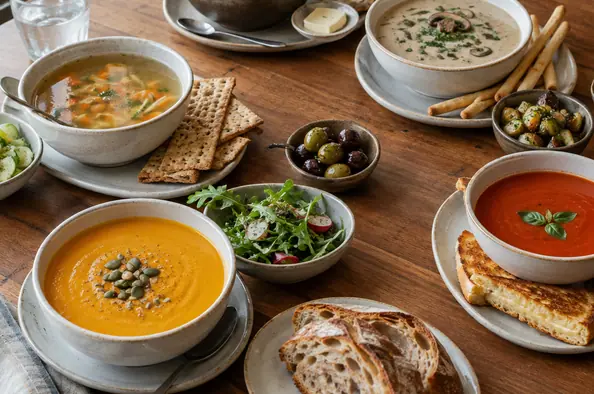
- Clear broth: Choose bread for dipping. If the soup contains few substantial additions, a small sandwich can supply a more substantial companion. Check for noodles or rice already in the bowl before automatically adding bread.
- Chunky vegetable soup: Let the solids guide you. A mostly vegetable-and-stock bowl leaves a different opening for a sandwich than one already containing potatoes, grains, and beans.
- Smooth tomato or vegetable purée: Crisp toast supplies a contrast to the smooth liquid. A toasted sandwich can do the same while adding more food. With a rich purée, consider whether you want that extra richness too.
- Dense bean or lentil soup: Greens with an acidic dressing offer a change of texture and flavor between spoonfuls. Bread remains an option, but it serves a different purpose.
Keep Toast Crisp
Ask for toast or croutons alongside the bowl when crunch is the point. Submerging them lets the soup soften them. Keep salad separate from the steaming bowl, with dressing on the side if you prefer to add it as you eat.
Begin with one clear contrast. As you get more comfortable reading the bowl, make the pairing more precise: crispness for purée, dipping bread for broth, or acidic greens beside dense legumes.
Ask About Stock, Thickeners, and Garnishes
Short, specific questions help staff check the relevant part of the recipe:
- “What stock is used?”
- “Does the soup contain milk or cream?”
- “Is flour used to thicken it?”
- “What comes on top?”
For vegetarian preferences, check the base as well as the visible vegetables or legumes. For vegan preferences, also ask about dairy, finishing toppings, and accompanying bread. A vegetable-based soup can arrive with Parmesan-containing pesto, sour cream, or herb-butter croutons unless the order specifies otherwise.
Gluten may appear in a flour thickener, noodles, croutons, or bread. Some commercial soup bases can also contain wheat-derived ingredients. These are possibilities to verify, rather than ingredients to assume every soup contains.
Verify the Batch
Appearance and a brief menu label cannot establish allergen safety. For a medically necessary restriction, ask staff to verify the recipe and relevant cross-contact information, including preparation of toppings. If they cannot verify the batch, choose a sealed, clearly labeled item that meets your needs or another fully verifiable option.
Make topping requests when you order. Garnishes may be added just before service—after the soup itself has already passed your ingredient check.
Put the Pairings to Work in Three Café Orders
These three combinations show how the companion’s role changes with the soup.
Vegetable Broth With a Small Sandwich
The broth contains few substantial additions, so the sandwich supplies more chew and substance. Ask whether bread is already included before ordering both. If vegetarian ingredients matter, confirm the stock and sandwich filling.
Tomato Purée With Crisp Toast
The toast creates a clear texture contrast without automatically adding a rich sandwich. Ask what makes the soup smooth and whether it includes cream or a dairy garnish. Keep the toast beside the bowl so you control how much softens.
Dense Bean Soup With Dressed Greens
The beans already give the bowl considerable solids. Greens with an acidic dressing introduce a different eating rhythm. Confirm the stock and any pork ingredients when relevant, and keep the salad separate from the hot soup.
Choose the Bowl First, Then Its Companion
- Identify the base and substantial solids.
- Judge the serving against your appetite, including any bread already provided.
- Confirm essential ingredients and finishing toppings.
- Choose a side with a specific purpose.
At the counter today, does your soup call for bread to dip, greens between spoonfuls, or a sandwich to make the lunch substantial?