A Bright Hibiscus Drink Can Turn Watery Before You Finish It
Picture the first glass: deep red tea, plenty of ice, a sharp, refreshing sip. You set it beside lunch. By the time you return, the ice has softened and the drink tastes thin. The color still looks convincing; the flavor has lost its shape.
That gap matters when making cold-steeped hibiscus tea. The pigments can color the water before the infusion develops enough tartness and body to hold up in the serving glass. At the other extreme, a forceful infusion can send you reaching for sugar or citrus before you have identified what needs adjusting.
I use a simple order for the pitcher: refrigerate the steep, strain it cleanly, then taste a small portion before building the finished drink. That sequence gives each decision a clear purpose—and keeps an experimental squeeze of lemon out of the whole batch.
Judge readiness by flavor, not redness alone. A beautiful pitcher is only the beginning.
Start with Food-Grade Hibiscus and a Covered Pitcher
Check the ingredient label before choosing a steeping routine. Plain hibiscus and a hibiscus-based fruit blend may share a shelf, yet they give you different starting points.
- Dried food-grade hibiscus: choose a product intended for beverages, with its ingredients clearly identified.
- Drinking water: use water you enjoy drinking on its own.
- A clean covered pitcher or jar: allow enough room to stir and pour without spilling.
- A fine-mesh strainer: use it to separate the infusion from the spent material.
- A small tasting glass: keep adjustments separate from the main batch.
- Ice and a serving glass: include these in the final taste check.
The dried red pieces commonly sold as hibiscus tea are the fleshy calyces of Hibiscus sabdariffa. Products may contain whole dried calyces or smaller fragments. That distinction helps explain why two packages can behave differently in the same pitcher.
Check the Calyces
Use beverage-grade hibiscus rather than treating ornamental hibiscus plants as interchangeable ingredients. The tasting sequence here is intended for plain, dried Hibiscus sabdariffa calyces. Rose hips, citrus peel, apple ingredients, or added citric acid change the flavor and extraction pattern; a familiar steeping routine may need reconsidering.
Keep the package nearby for the first batch. Its ingredient list and handling directions are more useful than judging the dried material by appearance.
Steep in the Refrigerator, Then Let Taste Set the Finish
For a first attempt, treat an overnight steep as a convenient workflow. Prepare the pitcher in the evening and assess it the following morning. The calendar gives you a tasting appointment, rather than a promise that every product will be ready.
- Add the hibiscus and drinking water. Record the quantities you actually use so the batch becomes a useful reference.
- Wet the dried material thoroughly. Stir gently to bring floating calyces into contact with the water.
- Cover and refrigerate. Keep the steep cold throughout the process.
- Inspect and taste the next morning. Pour a small sample and assess its tartness, body, and finish.
- Strain when the flavor is ready. Separate the liquid from the calyces using the fine-mesh strainer.
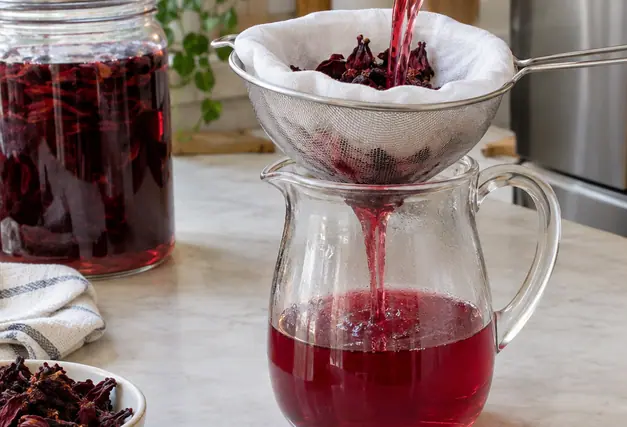
A pale-tasting sample may need more refrigerated contact time. A concentrated sample may already be ready to strain and dilute. Ingredient size, the amount of hibiscus, and blend composition all affect that decision.
Once you have a batch you enjoy, change one variable at a time. Keeping the product and quantities steady while adjusting the steeping interval makes the next result easier to interpret.
Adjust Sweetness First, Then Decide Whether Citrus Helps
Does a sharp glass need sugar, water, or lemon? Start by naming the sensation. Those additions solve different problems, and hibiscus already brings considerable tartness.
- Tartness is the sour, mouth-watering quality that gives hibiscus much of its brightness.
- Astringency feels drying or puckering across the mouth.
- Bitterness is a distinct taste; calling every forceful hibiscus sample bitter can lead to the wrong adjustment.
Pour a small glass of the strained, chilled infusion. If it tastes excessively concentrated, test a little cold water first. Taste again before adding anything else. Dilution changes the whole drink, so settle that question before deciding how much sweetness it needs.
If the flavor needs rounding, add a readily dissolving sweetener gradually. Simple syrup or honey thinned with warm water is easier to incorporate into a cold sample than dry sugar. Stir thoroughly and taste between additions.
Leave Citrus Last
Assess the sweetened sample before reaching for lemon or lime. Citrus adds its own acidity and aroma. Test a small addition only if that is the direction you want; hibiscus may already provide the brightness the glass needs.
Keep track of the successful adjustment before applying it to the pitcher. A balanced tasting portion is useful only if you can reproduce it.
Build the Glass So Melting Ice Does Less Damage
Give the ice less cooling work to do. Start with thoroughly chilled tea and a chilled serving glass, then add the ice intended for the finished drink.
Melting ice adds water. A particular cube shape cannot remove that trade-off, and a room-temperature pour asks the ice to cool the drink immediately. Chilling the components first helps preserve the balance you established during tasting.
Before adjusting the whole pitcher, serve a small portion over your usual ice. Sip it immediately, then return to it as the ice begins to melt. For casual dining, that second taste matters: the drink should remain enjoyable beside the food, rather than peak before the first bite.
If it becomes thin, revisit the serving dilution or the next batch's strength. Adding more sweetener alone will not restore the missing hibiscus character.
Keep the Pitcher Cold and Make the Next Batch Easier
Keep the strained infusion covered and refrigerated. Pour individual servings and return the pitcher to the refrigerator instead of leaving it on the table throughout the day. Make manageable batches and follow the ingredient supplier's handling instructions.
Record the Pitcher
Note the hibiscus product and cut, the dry hibiscus and water quantities, the steeping interval, and the adjustment you preferred after straining. Include any added water or sweetener. Those details give your next home café pitcher a practical starting point.
A useful batch note begins with the ingredient's identity. The red pieces sold as hibiscus tea are fleshy calyces harvested after the flower's petals have dropped.