
Can a Book Club Settle In Without Taking Over?
How can a book club feel welcome in a café without turning a shared room into a private venue?
The question becomes urgent when a group arrives expecting the room to bend around its plans. Picture eight people appearing unannounced on a rainy Saturday morning, then dragging chairs across the floor to build a makeshift conference table. The members may see an enthusiastic gathering. Staff and other customers see blocked paths, displaced seating, and a table arrangement that may be difficult to serve.
A more considerate organizer evaluates the venue as a shared ecosystem. Members need enough time and focus for a meaningful conversation, while staff need workable tables, clear aisles, and room for other customers. The café’s natural rhythm takes priority over the club’s preferred setup.
This approach also makes the meeting feel less conspicuous. People arrive, order, talk at a manageable volume, and leave within the expected window. The club belongs naturally in the room rather than requiring everyone else to accommodate it.
The Shared-Room Test
Ask one practical question before confirming a venue: could the group meet here without moving furniture, claiming spare tables, or narrowing an aisle? A hesitant answer usually means the footprint needs to shrink or the venue needs to change.
Design the Club Around a Single-Table Footprint
Capacity begins with furniture, not the invitation list.
In one workable planning process, the host found the venue’s largest standalone table and treated it as the firm boundary. The initial idea involved pushing three square tables together. That arrangement was abandoned because it would have obstructed the main aisle and taken flexible seating away from other customers.
A standard rectangular café table measuring roughly 48 by 30 inches comfortably accommodates about four to six people. That figure offers a useful reference, though the café’s actual furniture, floor plan, and stated policies should determine the final headcount.
Use the Cup-and-Book Test
Before inviting the group, check whether every attendee can have all three of the following:
- A proper seat that does not come from a neighboring table.
- A stable place for a cup, plate, or glass.
- Enough room to open or rest a book without extending into an aisle or unused table.
If coats, tote bags, and books spill outward before the discussion starts, the table is already over capacity. Keep belongings under chairs where they will not create a trip hazard. Large backpacks may need to stay at home or be reduced to the day’s essentials.
Beginners often estimate attendance from the number of chairs they can gather. A better progression is to begin with the table’s normal configuration, confirm the café’s seating rules, and cap RSVPs there. An established club can add a waitlist or alternate between smaller sessions rather than enlarging its physical footprint.
Choose a Café That Fits the Ritual
A spacious suburban bakery with ample seating supports a different kind of gathering from a narrow downtown espresso bar lined with two-tops. Both may serve excellent tea and beverages. Only one may suit an extended group conversation.
Scout the café during the exact period proposed for the meeting. In the test case, visits took place strictly between 2:00 p.m. and 3:30 p.m. on a Sunday. Matching the day and time revealed the conditions members would actually encounter, including customer turnover, ambient sound, and demand for seats.
A calm weekday afternoon cannot predict a busy weekend service. Coffee brewing equipment matters too: the organizer committed to the venue only after confirming that the espresso machine would not drown out conversation at a normal speaking volume.
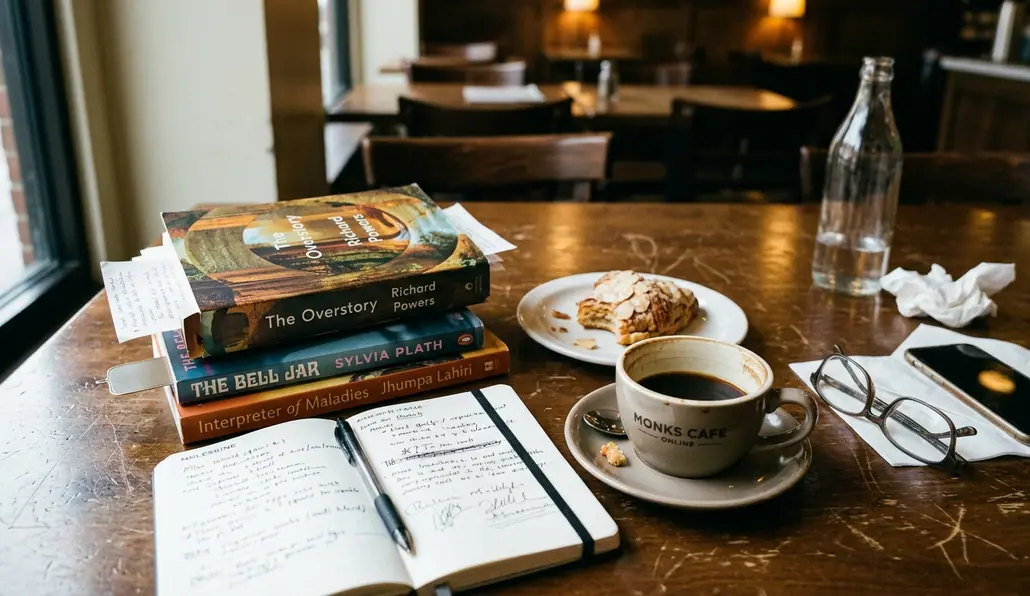
Café Scouting Checklist
- Visit during the exact day and time of the proposed meeting.
- Verify that the largest standalone table fits the group without added chairs.
- Listen for espresso grinders, blenders, overhead music, and nearby conversations.
- Check whether members can hear one another without raising their voices.
- Look for an accessible entrance and a route to the table with clear passage.
- Review the menu for enough variety to serve the group’s likely preferences.
- Note whether counter or table service changes how people should arrive and order.
- Consider transport convenience and where wet coats or bags could remain safely.
Stay long enough to observe turnover. A table that looks available on entry may be central to the café’s busiest period twenty minutes later. I would favor a modest table in a steady room over a larger one that becomes contested as the queue grows.
Set Expectations Before Anyone Arrives
The invitation does more than announce a book. It defines the group’s relationship with the café before anyone walks through the door.
Name the venue, meeting window, reading selection, and RSVP deadline. State plainly that attendees are expected to purchase from the café. In the planning example, the purchase expectation appeared as a core condition of attendance rather than a last-minute reminder, and the RSVP deadline was set two days before the meeting so the host could finalize the headcount.
What the Invitation Should Cover
- Place: Give the café name and enough arrival information for members to find the group without roaming between tables.
- Time: Publish a clear start and finish rather than an open-ended afternoon.
- Reading: Identify the book, chapter, essay, or other selection.
- Attendance: Set the RSVP deadline and explain that seating is limited to the confirmed table footprint.
- Ordering: Ask each attendee to purchase an item near the beginning of the meeting.
Unannounced guests can create an awkward choice between crowding the table and turning someone away at the door. Tell members in advance that extra attendees may be difficult to accommodate. The wording can remain warm while holding a firm boundary.
Members with dietary needs should review the menu before committing. Only the café can confirm ingredients, preparation methods, cross-contact controls, or allergen procedures, so organizers should avoid making assurances on its behalf.
Arrive, Order, and Settle In Thoughtfully
The host arrives about 15 minutes early. That small head start allows time to assess the room, speak with staff when necessary, and choose available seating without marking extra tables with books or bags.
Members then order individually as they arrive. This sequence avoids presenting the barista with one unusually large ticket and gives each person responsibility for their own drink, pastry, or casual dining choice. Once cups are on the table and belongings are contained, the welcome can begin.
A Simple Arrival Protocol
- Check whether the expected table remains appropriate for current conditions.
- Use only the chairs and surface included in that table’s normal setup.
- Ask staff about seating if a policy or sign is unclear.
- Direct arriving members to order near the start.
- Place bags beneath chairs and keep books within the tabletop boundary.
Some groups encourage a second beverage or pastry after the first hour or so. The gesture supports the café, yet regional and location-specific expectations deserve attention. A second order may be customary in a spacious suburban bakery and still be insufficient during a high-demand period at a downtown espresso bar.
A Purchase Is Support
Buying an item contributes to the business. It does not override seating limits, busy-period policies, posted time restrictions, or a staff request to free the table.
Run a Discussion That Matches the Room
“How do we keep a lively book discussion from becoming the loudest conversation in the café?” The practical answer is structure.
Begin with a brief welcome, then invite one opening observation from each person. In the tested format, these contributions were limited to two to three minutes per attendee. The limit gave everyone an entry point while discouraging interruptions and competing side conversations.
Move next to a small set of focused prompts. Questions about one scene, decision, image, or argument tend to produce more precise answers than a broad request for everyone’s opinion of the whole book. After each person has spoken once, open the discussion and allow connections to develop.
The Host’s Quiet Work
The host monitors four things without turning the gathering into a seminar:
- Volume: Lower their own voice first when the table begins getting louder.
- Side discussions: Bring parallel conversations back to the shared prompt.
- Table spread: Keep books, cups, devices, and plates inside the original footprint.
- Time: Protect a few minutes at the end to choose the next reading and meeting plan.
Concise first responses build confidence among quieter members. As the club becomes more practiced, the host can use follow-up prompts, pair contrasting interpretations, or ask someone to return to a specific passage. The advanced skill lies in preserving natural conversation while preventing volume and timing from drifting.
Notice When the Café Needs the Table Back
Courtesy depends on observation. A growing queue, full neighboring tables, customers scanning the room for seats, or staff reorganizing furniture can all signal pressure on the available space.
These signs call for attention rather than speculation. Customers do not need to guess what staff members think or assign motives to routine movements around the room. When the situation is uncertain, the host can ask whether the table will be needed soon.
A direct request settles the question. A respectful group acknowledges it, closes the discussion, and begins packing without debate.
Prepare the Exit Before It Is Needed
The group in the planning example agreed that the host would initiate departure when waiting customers began hovering near occupied tables. The exit plan required wrapping up and packing bags within a few minutes of noticing a queue forming at the door.
- Finish the current speaker’s thought.
- Confirm that future planning will continue online.
- Collect books, cups, coats, and bags promptly.
- Check beneath chairs and restore moved personal items.
- Continue casual conversation outdoors where conditions allow.
This plan prevents the common scramble to find another café table nearby. The formal meeting ends cleanly, while members who want more social time can decide what to do after leaving the shared room.

Make Respect Part of the Next Meeting
The follow-up can be brief. Ask whether members could hear, whether the table felt crowded, whether the timing suited the venue, and what should change before the next gathering.
In the example, the organizer sent a short message focused on acoustics and comfort. Those responses helped determine whether the café should become a regular meeting place. Return when the arrangement worked for the business and the group; otherwise, choose a venue whose seating and service pattern better match the ritual.
Turn Courtesy Into Routine
Repeatable habits carry more weight than elaborate rules. Confirm attendance, keep belongings compact, order near the beginning, moderate the conversational volume, and leave at the planned time. If one habit breaks down, revise the process before the next invitation goes out.
The final review should also test the physical boundary that shaped the meeting from the start. Everything comes back to one number: a standard café table, roughly 48 by 30 inches, seats four to six people comfortably, and no amount of enthusiasm changes what that surface can hold.