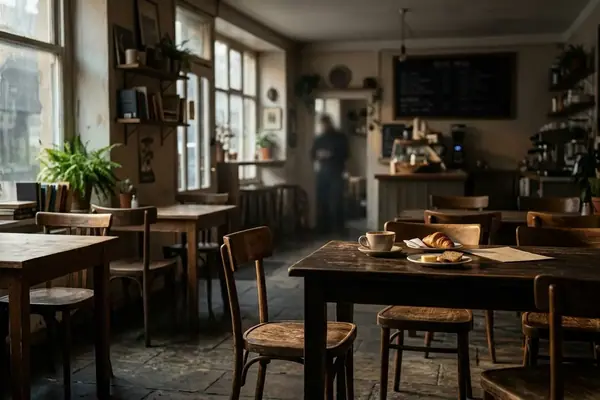
The espresso machine hisses, the door chimes, and a customer walks in, bypassing the register to claim a corner booth. They unpack a laptop, a tablet, a notebook, and a tangle of cords. From behind the counter, the barista watches the room's dynamic shift instantly.
A café can feel like a perfect workspace until one person treats it like a private office. We often view remote work through the lens of our own comfort and productivity. Yet establishing the café as a shared ecosystem grounds our habits in mutual respect. This guide explores how to work productively without becoming the person everyone notices for the wrong reasons.
Rule 1: Read the Café Before You Unpack
How do you know if a coffee shop actually wants you to work there? The answer lies in the room's physical cues and daily rhythms. Before ordering, assess the table spacing, visible outlets, and the staff's current pace.
A commuter espresso bar operates on speed—unpacking a laptop here disrupts the core business model. During the peak morning rush, roughly 07:30 to 09:15, table turnover expectations tend to fall between 30 and 45 minutes.
Neighborhood cafés and hybrid workspaces offer more flexibility, but timing remains critical. You might assume a large, empty café at 2:00 PM will remain empty, only to be caught in the middle of a loud 3:15 PM after-school rush. Choose off-peak hours for longer sessions. Participant reviews suggest that arriving just after the morning commute clears out provides the best window for focused work.
Rule 2: Take the Smallest Useful Table
Space is a café's most valuable commodity. When you occupy a four-person table alone, you actively cost the business money. Choose a two-top, a counter seat, a window ledge, or a spot at the communal table.

A standard two-top table measures roughly 24 by 24 inches. That surface leaves just enough room for one 13-inch laptop and a single beverage. Forum feedback confirms that problems arise through footprint creep. Coats, bags, chargers, notebooks, and oversized water bottles quickly spill over into adjacent spaces. Keep your belongings contained to your immediate physical footprint. Spreading out briefly to review a document is fine. Claiming territory for hours is not.
Rule 3: Pay Rent in Coffee, Food, and Awareness
Buying one small coffee does not automatically justify a half-day stay in a busy room. You are renting space, and that rent is paid through ongoing purchases.
Ongoing conversations with former café managers point to a purchasing rhythm that helps offset the cost of a lingering customer. The baseline expectation is ordering a new item roughly every 90 to 120 minutes. Move from coffee to a pastry, or from a sandwich to sparkling water, as you transition between work blocks.
Tipping expectations shift dramatically based on your footprint. Dropping a few coins makes sense for a quick drip coffee to-go. That math changes entirely for a barista who refills your water glass three times over a four-hour work session. Compensate the staff for the space you occupy and the extended hospitality you receive.
Rule 4: Your Call Is Louder Than You Think
Video calls are the fastest way to break the café-work social contract. Taking a meeting in a public dining room forces everyone else to participate in your workday.
Keep meetings short, take calls outside, or reserve cafés strictly for asynchronous tasks. Headphone etiquette requires strict boundaries. Never use speaker audio. Silence notification pings. Avoid recording loud voice notes. There is one catch with modern audio gear: noise-canceling headphones only filter audio for the wearer. Your microphone will still broadcast the café's ambient noise to everyone else on the call.
Warning: Screen privacy is a personal risk management issue. Patrons frequently leave sensitive client documents open while stepping away to the restroom, exposing confidential data to the entire room.
Rule 5: Do Not Build a Satellite Office
Power outlets, Wi-Fi bandwidth, and table space are shared resources. Pushing the limits of these amenities creates friction.
Do not bring power strips. Leave the external monitors at home. Avoid constructing a full desk setup that blocks walkways. From what we've seen, physical tripping hazards created by trailing cables are a constant source of frustration, though this varies depending on the café's floor plan.
Pro Tip: Arrive with your devices fully charged to avoid hunting for wall outlets.
If you must plug in, use a compact charger and keep your cables pinned close to the wall. A café is a temporary outpost, not a permanent headquarters.
Rule 6: Make the Staff’s Job Easier
A productive café session relies on the goodwill of the people working behind the counter. Greet the staff when you walk in. Order clearly. Clear your own dishes. Never treat the barista as your personal office support.
If you need to know the Wi-Fi password or outlet policies, ask politely before you settle in. Beyond basic manners, pay attention to the room's non-verbal cues. Staff cleaning patterns often signal when a stay has overextended its welcome. If a barista is repeatedly wiping down the tables immediately surrounding yours, or if customers are hovering near the door, adapt your behavior. Read the body language of the room.
Rule 7: Leave Before the Room Has to Ask
Knowing when to pack up is the final test of good café etiquette. A graceful exit happens before the staff feels compelled to intervene.
Transition points dictate this timing. When a quiet work environment naturally shifts into a crowded dining room, your cue to leave has arrived. Pack your bag when the tables fill up, when your work becomes call-heavy, or when you no longer intend to buy anything. Leave your table clean. Push in your chair. Thank the staff on your way out.
Good café workers have a reliable way to preserve the atmosphere that made them want to work there in the first place: they know when to go home.
The 90-Minute Café Audit
Use this checklist to evaluate your stay:
- Has it been more than 90 minutes since my last purchase?
- Are there customers standing and waiting for a table to open up?
- Have my belongings expanded beyond the immediate footprint of my laptop?
- Do I have a video or voice call scheduled in the next half hour?
Key Takeaway: If you answer yes to any of these questions, it is time to order another item or pack up your bag.