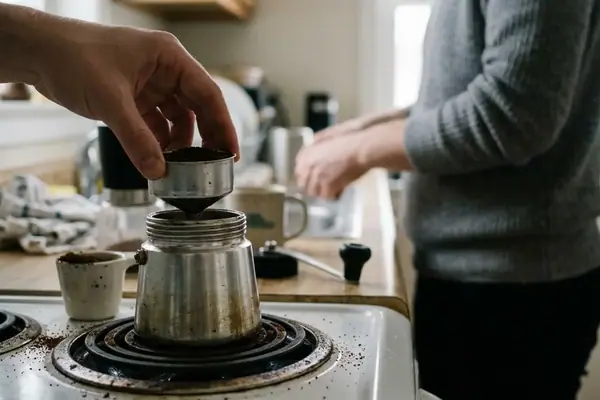
A weekday coffee can taste perfectly fine and still feel like nothing happened. You drink it while answering a message, searching for keys, checking the weather, and wondering why the morning already feels late.
That is the small problem this ritual is meant to solve. Not better coffee in the competitive sense. Better attention.
Table of Contents
- Why Does Weekday Coffee Feel So Forgettable?
- Set the Ritual Up Before You Need It
- Brew for Attention, Not Perfection
- Borrow the Café Cues That Actually Matter
- Make the Ritual Fit the Morning You Actually Have
- Do Not Turn Your Coffee Ritual Into Another Chore
- A Simple Weekday Café Ritual to Try Tomorrow
Why Does Weekday Coffee Feel So Forgettable?
The common question is simple: if the beans are decent and the brewer works, why does weekday coffee feel so flat?
The answer is rarely the grinder, the kettle, or the origin printed on the bag. The bigger culprit is usually the setting. At home, coffee often gets folded into everything else: email, lunches, laundry, a half-open dishwasher, a phone sitting too close to the mug.
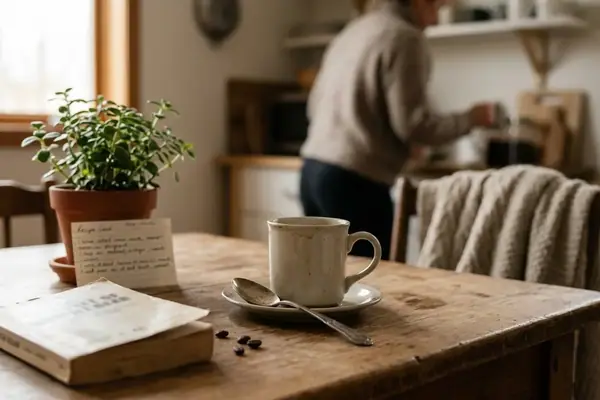
A café does more than brew. It gives the drink a frame. There is a counter, a handoff, a cup with weight, a table that is not your desk, and a few minutes when the whole point is to be there. Even a busy café has pacing. You wait, you receive, you sit or walk out with intention.
Weekday home coffee tends to lose those boundaries. The coffee may be technically sound, but the experience becomes interchangeable with every other task.
Key Takeaway: A café-like morning starts by treating coffee as a small sequence, not as another item swallowed by the commute.
Set the Ritual Up Before You Need It
I learned this the unglamorous way: standing in a kitchen at 6:42 a.m., holding a filter, unable to find the spoon I use every day.
That kind of friction looks minor from the outside, but it changes the mood of the drink. Early morning is a poor time to make choices. The more decisions you stack before the first cup, the less the coffee feels like a ritual and the more it feels like a scavenger hunt.
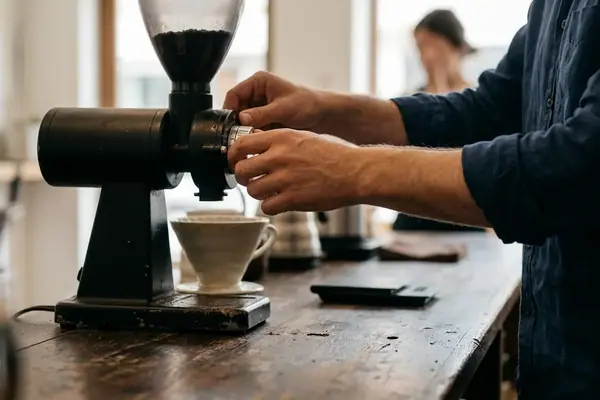
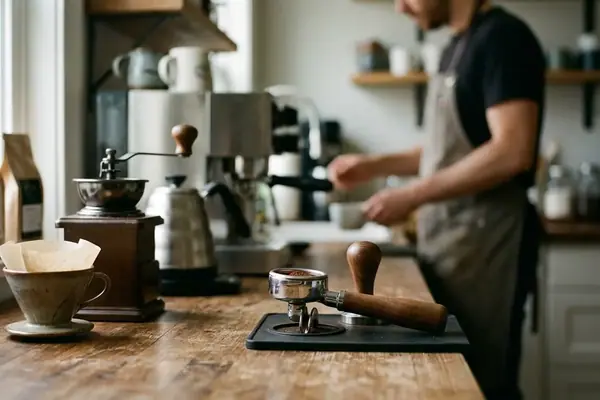
Set up a small coffee station the night before. Put the beans, grinder, filters, mug, spoon, and kettle in one visible place. If you use an automatic brewer, place the carafe and filter basket where they are easy to reach. If you brew by hand, set the dripper or press beside the mug rather than leaving it in a cabinet.
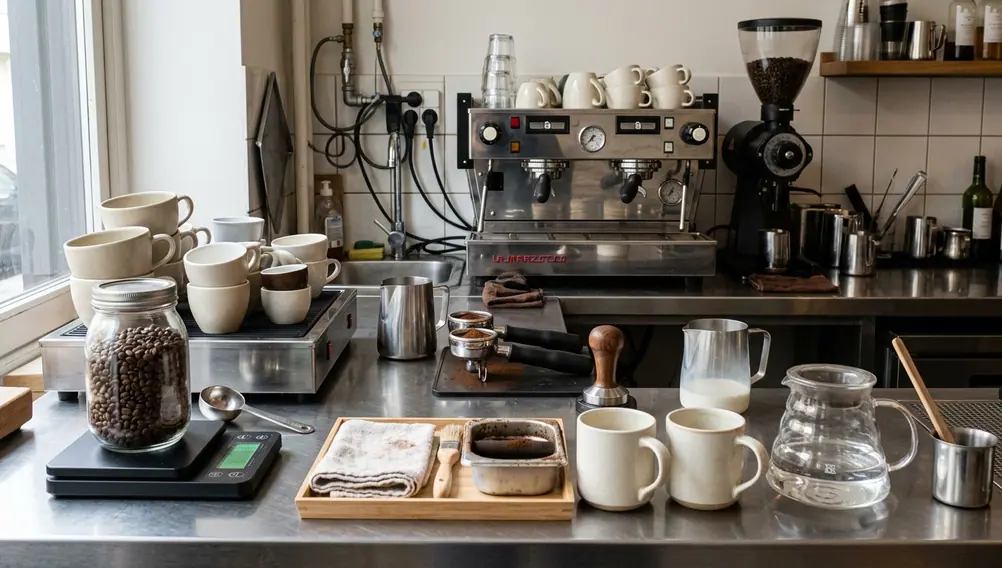
The nightly version usually takes about 3 to 4 minutes. That is the right size for a weekday habit: short enough to do when tired, visible enough to help the next morning.
Choose one weekday default
Do not debate brewing methods at sunrise. Pick one default weekday coffee and let weekends carry the experiments.
- One bag or blend you know well.
- One brewer you can operate while half-awake.
- One mug that feels good in your hand.
- One place where the first sip happens.
This is not a rule against variety. It is a guardrail against decision fatigue.
Brew for Attention, Not Perfection
Beginners often assume a better weekday ritual requires tighter measurements, more tools, and a more exact recipe. Sometimes that helps. Often, it just raises the chance that the routine collapses on a busy Tuesday.
Make the coffee repeatable before you make it impressive.
Use the same coffee-to-water ratio each weekday, even if you measure it simply. Use the same mug. Aim for the same approximate brew time. These anchors make the cup familiar, and familiarity is what lets attention settle.
A simple sensory checkpoint
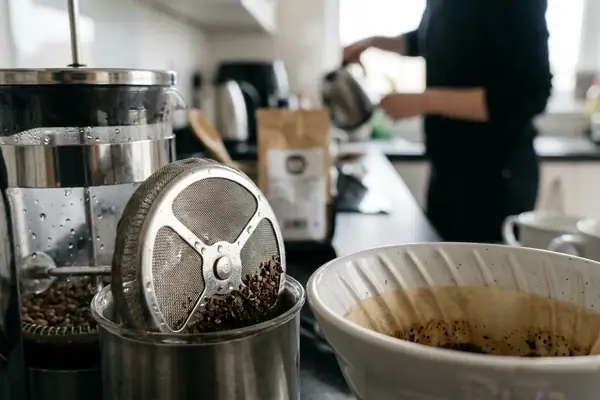
Pick one moment in the brew to actually notice. Smell the grounds after you open the bag or jar. Watch the first pour darken the coffee bed. If you use a pour-over, observe the bloom for roughly 30 to 45 seconds. If you use a press, watch the surface shift from dry grounds to a glossy crust.
That is enough.
The advanced tip is not to chase every variable on a weekday. Save the careful tasting notes for days when you have room for them. On work mornings, the goal is to connect the brew to your senses before the day pulls your attention elsewhere.
Pro Tip: If your coffee tastes inconsistent, change only one thing for a week: grind, amount of coffee, or brew time. Changing all three makes the next cup harder to read.
Borrow the Café Cues That Actually Matter
The best café cues are not expensive. They are environmental.
Ceramic weight matters. Warm lighting matters. A quiet background sound can matter. So can a plate for toast, a folded napkin, or a chair that is not the one you use for work. These cues tell the body, in plain language, that coffee has its own place in the morning.
Use a real cup instead of a travel mug whenever the schedule allows. A travel mug is practical, but it points the mind toward departure. A ceramic cup invites a pause.
Build a small café tray
A tray may sound fussy until you try it once. It gathers the experience into one movable setting.
- Coffee in a real cup.
- A small glass of water.
- A spoon.
- A napkin.
- One simple bite: toast, fruit, or a biscuit.
Nothing here requires a kitchen renovation. The point is to change the perception of the room. When the coffee, water, and small bite arrive together, the morning feels less scattered.

If your kitchen light is harsh, turn on a side lamp. If silence feels too stark, choose one low-volume album or a familiar radio station. Avoid turning this into a performance. You are borrowing the cues that create a defined setting, not recreating a café down to the chalkboard menu.
Make the Ritual Fit the Morning You Actually Have
How much time do you really have: 5 minutes, 10 minutes, or 20?
That question matters because an overbuilt ritual can backfire. One catch: attempting a 20-minute slow brew on a morning with an early commute often creates more stress than calm, completely defeating the purpose of the ritual.
If coffee quantity tends to creep upward when mornings get long, keep caffeine in view too. The FDA caffeine guidance uses up to 400 mg per day as a benchmark for many adults, though personal tolerance varies.
Weekday coffee ritual time blocks
| Time Available | Brew Method | Key Action | Cleanup |
|---|---|---|---|
| 5 minutes | Automatic brewer or pre-ground coffee | Drink one quiet sip from a favorite mug before leaving | Rinse the mug later |
| 10 minutes | Manual pour or press with a fresh grind | Sit down for half the cup | Rinse equipment immediately |
| 20 minutes | Slower manual brew or a relaxed batch | Add water, a small bite, and a dedicated seat | Clean one item before moving on |
The 5-minute version
Use pre-ground coffee or pre-measured beans. Let the automatic brewer do its work. Pour into the mug you actually like, not the one closest to the sink. Take one quiet sip before you leave.
That sip is the ritual.
The 10-minute version
Grind fresh if you can. Brew with a pour-over, press, or another familiar manual method. Sit down for half the cup, even if the second half goes into a travel mug. Rinse the brewer right away so tomorrow does not inherit today’s mess.
The 20-minute version
This is the slow weekday morning: coffee, water, a small plate, and a real seat. Use it when it fits. Do not use it to punish a tight schedule.
Do Not Turn Your Coffee Ritual Into Another Chore
The danger is obvious: the ritual becomes a checklist with better lighting.
That is not the goal. A weekday coffee ritual should survive an imperfect kitchen, average beans, a sleepy mood, and a calendar that shifted overnight. If it depends on perfect conditions, it will not last.
Warning: Do not abandon the routine entirely because the kitchen is messy from the night before. Scale it down instead.
The minimum viable ritual has three parts: one intentional pause, one sensory cue, and one repeatable brewing step. That might mean smelling the grounds, brewing the same amount as yesterday, and taking three sips at the counter before packing your bag.
On exceptionally rushed mornings, scaling the ritual down to a thermos and a bakery stop is not failure. It is adaptation. A café-like rhythm should make the morning feel more humane, not more fragile.
A Simple Weekday Café Ritual to Try Tomorrow
Try this once before redesigning anything. It requires zero new purchases.
- Set up the station tonight. Place the coffee, filter, grinder or scoop, kettle or brewer, spoon, and mug together.
- Choose the mug now. Pick the one that makes the coffee feel deliberate.
- Brew one familiar coffee. Do not test a new method tomorrow morning.
- Notice one sensory cue. Smell the grounds, watch the first pour, or observe the color change in the cup.
- Sit for three uninterrupted sips. No phone, no inbox, no standing halfway out the door.
- Clean one item before leaving. Rinse the dripper, spoon, mug, or carafe. Leave one small signal that the ritual can happen again.
That is enough structure to change the morning without making it precious. The café feeling comes from the setting, the sequence, and the attention around the cup.
Key Takeaway: Make weekday coffee feel more like a café by shaping what surrounds it: prepare the station, repeat the brew, add one sensory cue, and protect a brief pause.