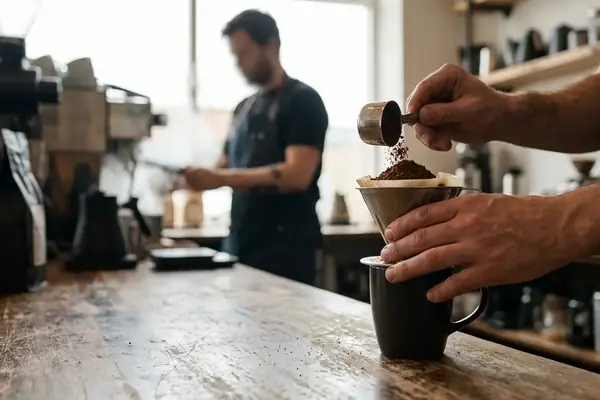
The Everyday Coffee Question Is Not Really About “Better”
French press and pour-over both make excellent coffee, which is exactly why the argument never seems to end.
The more useful question is not which brewer can win a tasting table. It is which one still behaves kindly at 7:00 AM on a Tuesday, when the toast is getting too dark, the kettle is whistling, and someone has moved your favorite mug.
That is the frame I use for this comparison: morning friction. French press rewards a broad, forgiving routine. Pour-over rewards attention, steady pouring, and a little patience with detail. One gives you texture and generosity; the other gives you separation and clarity.
If you drink coffee with milk, share a pot at breakfast, or prefer a heavier cup, the French press will probably feel more natural. If you notice aroma changes as a cup cools, like brighter coffees, and enjoy adjusting technique, pour-over has more room to show off.
Quick Verdict: Choose the Brewer That Matches Your Morning
Pour-over usually makes the cleaner, more defined cup. French press usually makes the more full-bodied, lower-fuss cup.
That answer sounds simple, but it matters because most people do not interact with coffee like judges at a brewing competition. They interact with it while half-awake, under a deadline, and hoping the first cup of the day tastes like something they meant to make.
Everyday Brewing Comparison MatrixKey Takeaway: Choose French press if you want multiple cups, heavier mouthfeel, and less precision. Choose pour-over if you want a brighter, cleaner cup and do not mind giving the brewer your full attention for a few minutes.
| Feature | French Press | Pour-Over |
|---|---|---|
| Active attention required | Low: setup, wait, and plunge | High: continuous pouring |
| Cup profile | Heavy body, textured, lower perceived acidity | Clean, bright, high clarity |
| Cleanup friction | Wet grounds and mesh screen cleaning | Paper filter lift-out and quick rinse |
| Batch size | Comfortable at 800ml to 1000ml | Usually happiest around 250ml to 500ml |
How French Press and Pour-Over Actually Extract Coffee
A beginner can understand the difference without a chart full of extraction curves. French press is immersion brewing. Pour-over is percolation brewing.
French Press: Immersion and Patience
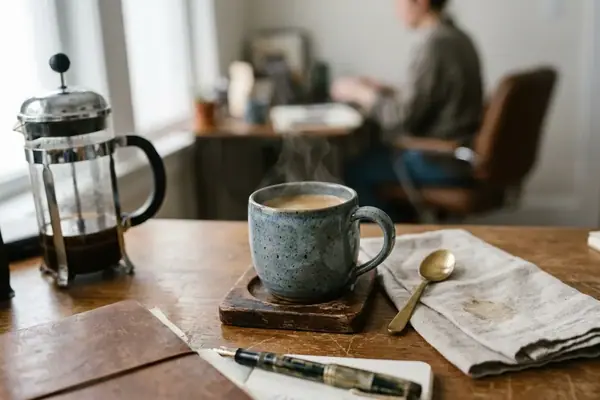
In a French press, ground coffee sits in hot water for several minutes before the metal mesh plunger separates the liquid from the grounds. Typical steep times run about 4 to 5 minutes, which gives the coffee time to saturate evenly.
This is why French press feels forgiving. If your pouring is clumsy, the brewer does not care much. Once the water and coffee are together, time does most of the work.
Pour-Over: Flow and Control
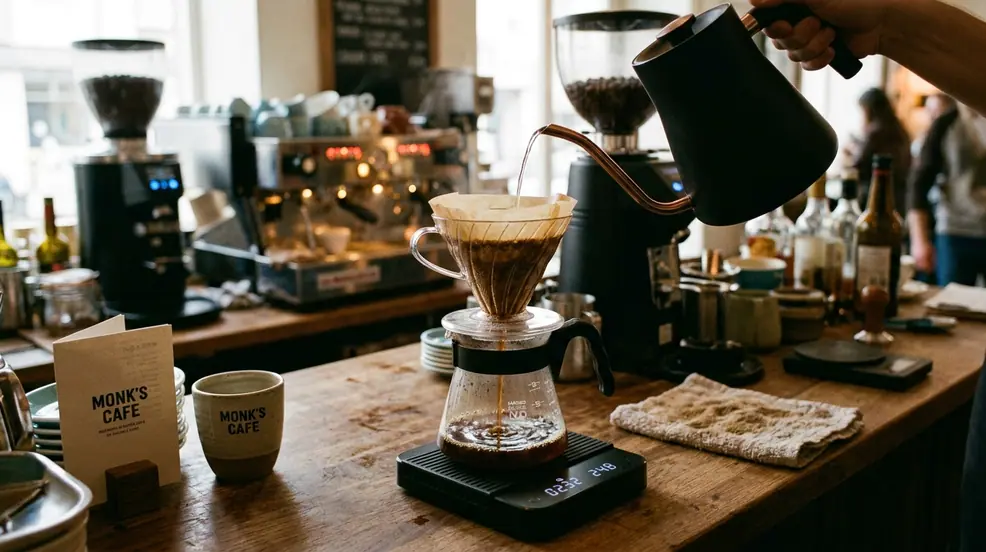
In a pour-over, water passes through a bed of coffee and then through a paper or metal filter. Contact times generally span 2.5 to 3.5 minutes depending on dose, grind, and pouring rhythm.
That flowing water is the whole point. It can pull out delicate aromas and create a cup with more separation between sweetness, acidity, and finish. It can also punish a rushed hand.
Think of French press as saturation. Think of pour-over as sorting. The first tends toward roundness; the second tends toward brightness.
Flavor and Texture: Body vs Clarity
The French press cup feels dense because the filter lets more through. Standard metal mesh filters allow particles smaller than roughly 100 to 150 microns to pass into the final cup, along with coffee oils that paper would trap.
That gives the drink a heavier body and a broad aroma. It can also leave sediment at the bottom of the mug. Some people love that last gritty reminder; others quietly stop drinking before the final sip.
Pour-over, especially with a paper filter, tastes cleaner. It often shows more brightness and more transparency, which is why light and medium roasts can seem more expressive in this format.
Roast Compatibility in Real Cups
A medium-roast washed Ethiopian coffee can taste rounded and perfumed in a French press, while the pour-over version may make the citrus and floral notes easier to name. Neither is automatically better. They are emphasizing different parts of the same coffee.
Dark roasts expose the tradeoff quickly. A dark roast may taste rich and chocolatey in a French press but come across as ashy and hollow when brewed as a pour-over. The paper-filtered cup has fewer places for roast bitterness to hide.
Pro Tip: If a coffee tastes thin as a pour-over but pleasant in a French press, do not assume the beans are bad. The brew method may simply be exposing sharpness that body would otherwise soften.
Effort, Timing, and Repeatability on a Weekday
The French press asks you to set it up, wait, and plunge. The pour-over asks you to participate.
In our testing, active pouring time for a standard 300ml pour-over requires about 90 to 120 seconds of continuous attention. That may not sound like much, but it is a long stretch when you are also making eggs, finding a lid for a travel mug, or answering a child’s question from the hallway.
The French press can handle being ignored for a minute. A pour-over can go sideways in that same minute if the bed dries unevenly or the flow stalls. One common problem is a pour-over turning bitter because the grinder produced too many fines, choking the paper filter.
Repeatability Depends on Your Temperament
Careful home brewers can make pour-over highly repeatable. Use the same dose, water temperature, grind setting, and pour pattern, and the cup becomes easier to steer.
Rushed users often experience it differently. The same technique that feels meditative on Saturday can feel fussy before work.
French press repeatability comes from fewer moving parts. Use a consistent grind, a familiar steep time, and a gentle plunge. You will not get the same clarity, but you may get the same satisfying cup more often.
Cleanup, Cost, and Counter Space Matter More Than People Admit
People like to talk about flavor. They are quieter about sink behavior.
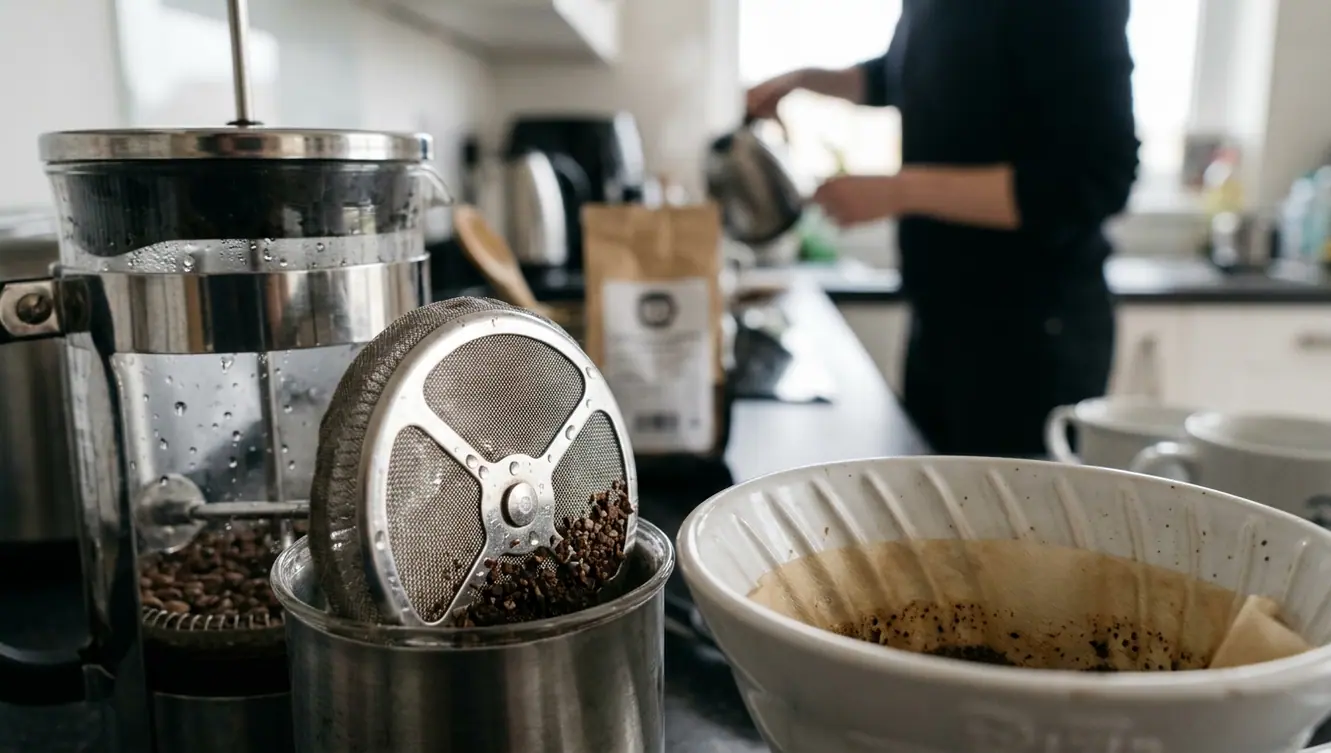
French press cleanup means dealing with wet grounds and washing the mesh plunger. Rinsing a French press screen thoroughly often takes about 1.5 to 2 liters of tap water to clear trapped grounds from the mesh. That is not difficult, but it is enough friction to matter after dinner or before a commute.
Pour-over cleanup is tidier if you use paper filters: lift the filter, discard or compost it where appropriate, rinse the cone, and move on. The tradeoff is recurring paper waste and the need to keep filters stocked.
The Real Cost Is Not Always the Brewer
Both brewers can be inexpensive. A basic French press and a basic dripper can each live happily in a small kitchen.
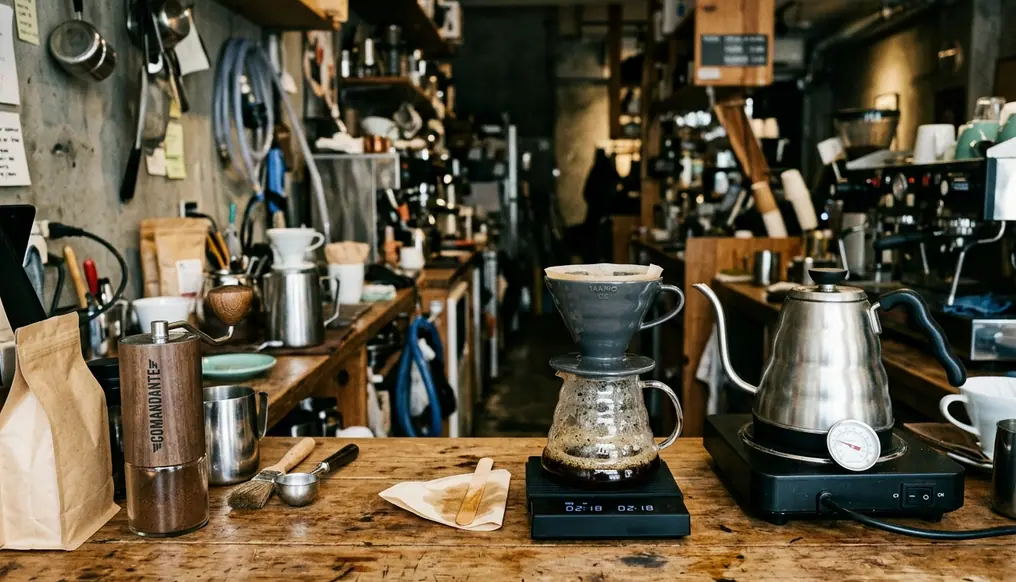
Pour-over, however, often benefits from a gooseneck kettle and a steady filter supply. The kettle is not mandatory, but it makes controlled pouring much easier. French press is less particular about pouring shape, so the gear list stays shorter.
Warning: If counter space is tight, do not judge by brewer size alone. A pour-over setup may also include filters, a kettle, and a scale; a French press may demand more drying space after washing.
Where This Comparison Has Limits
This article compares typical home use, not professional barista competition technique.
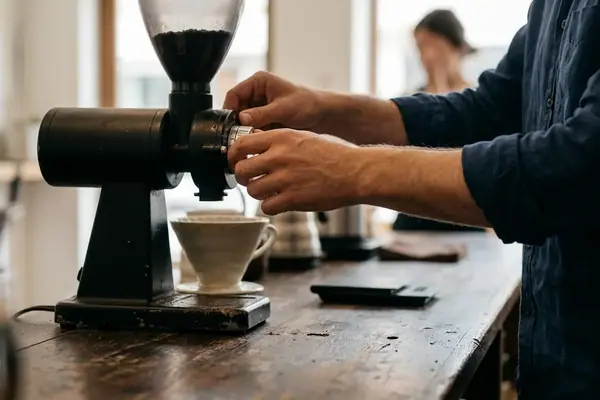
Results shift with grinder quality, water mineral content, roast level, coffee freshness, and personal taste. The biggest practical caveat is the grinder: this comparison assumes the use of a burr grinder. A blade grinder heavily skews results in favor of the French press because uneven dust and boulders can clog pour-over filters and create muddy extraction.
The testing habits behind this comparison also reflect a normal kitchen, not a controlled setup. A flat-burr grinder sets a cleaner baseline than many entry-level setups, so readers using less consistent grinding equipment may see wider differences.
For readers who want to go deeper into brewing science, the ongoing educational work at the UC Davis Coffee Center is a useful starting point.
Best Use Cases: When Each Brewer Wins
Here is the practical version: match the brewer to the scene, not the fantasy of your most patient self.
Best for One Cup
Pour-over wins for one focused cup, especially in the 250ml to 500ml range where flow rates are easier to manage. It suits drinkers who notice acidity, aroma changes, and origin differences.
Best for Two People
French press wins when the table needs coffee at the same time. It easily scales to 800ml to 1000ml batches, making it better for brunch, shared apartments, and casual diners.
Best for Light Roast
Pour-over usually gives light roasts more room. The cleaner filter profile helps fruit, florals, and delicate sweetness stand apart.
Best for Dark Roast
French press is often kinder to darker roasts. The oils and suspended solids can make roast-driven chocolate and spice feel fuller instead of sharp.
Best for Slow Weekends
Pour-over wins if the ritual is part of the pleasure. A slow spiral pour, a warm mug, and a coffee that changes as it cools can make the process feel worth it.
Best for Office Mornings
French press wins for low ceremony. Add coffee, add water, wait, plunge, pour. It is not careless coffee; it is coffee that understands interruption.
Final Recommendation: Better Everyday Coffee Is the One You Actually Repeat
If your priority is the cleanest expression of a coffee, buy a pour-over and give it the attention it deserves. If your priority is a rich, dependable cup with less technique pressure, buy a French press.
The better everyday brewer is the one that fits your actual mornings. A great cup made consistently beats a perfect cup made rarely.
For many homes, the honest answer is not either-or. Keep a French press for shared breakfasts and darker roasts. Keep a pour-over for quiet single cups and coffees you want to study. But if you are choosing just one, choose the brewer that matches how you behave before the first sip.