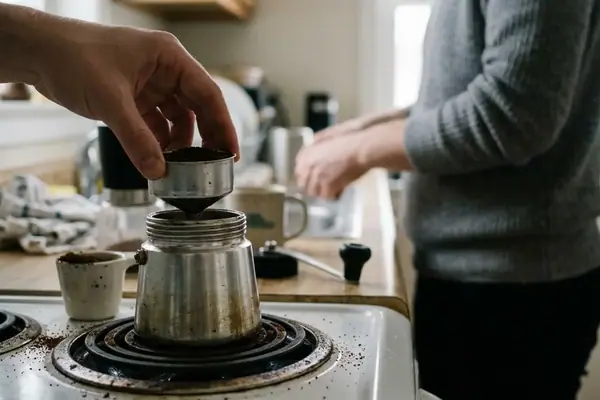
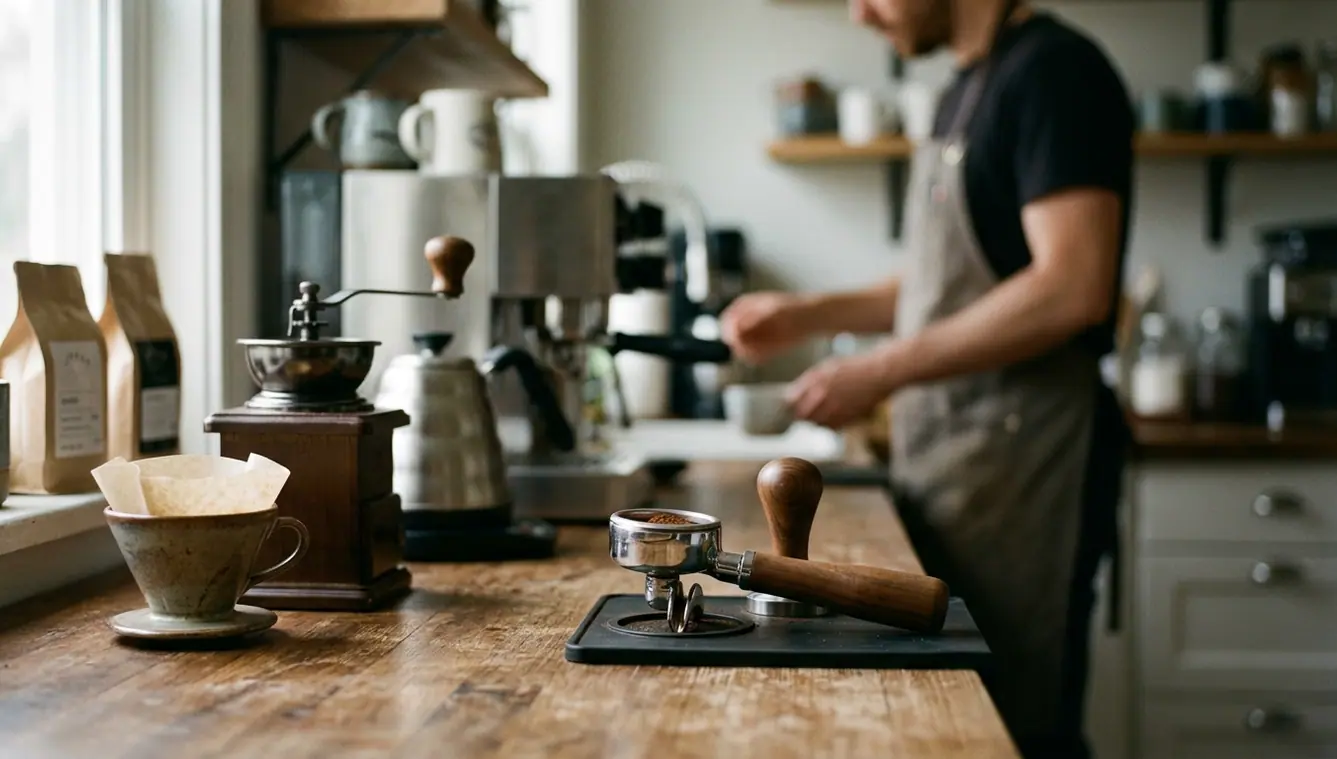
The Problem Is Not That Your Kitchen Needs More Gear
The most attractive home café setups I see have the same weak spot: they look ready for a magazine, then make the first cup of the day harder than it needs to be.
A better home café starts with taste and pace. Does the coffee come out clearer? Can you repeat yesterday’s good cup? Does the counter feel calmer at 7:10 a.m., when nobody wants a puzzle before caffeine?
That is the filter for this guide. Every essential below has to earn its space on the counter, shelf, cart, or pantry ledge. If it only photographs well, it can wait.
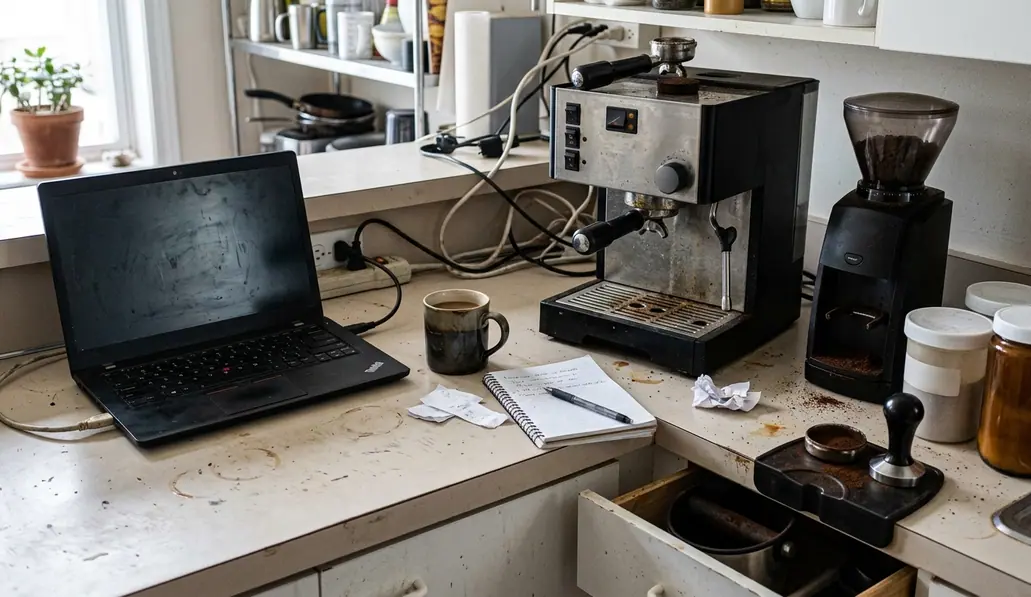
The goal is not to build a tiny commercial bar in your kitchen. It is to make one ordinary drink, on an ordinary morning, taste better and feel less rushed.
Criteria for Selection: What Counts as an Essential
A home café essential should do at least one of four things: improve flavor, reduce friction, support repeatable habits, or make the pause more comfortable.
That ruled out more than it included. Novelty gadgets, single-use accessories, complicated brewers, and expensive tools that only matter in advanced espresso workflows did not make the first list. A low-cost precision tool often beats a decorative brewer because it changes the cup you actually drink.
Key Takeaway: The best home café essential is one you will use on an ordinary Tuesday morning.
There is also a practical question worth asking before buying anything: where will it live? If an item has to be pulled from a high cabinet, rinsed in three parts, and reassembled before work, it is not an essential yet. It is a weekend project.
The Essentials That Improve the Cup First
1. A Consistent Burr Grinder
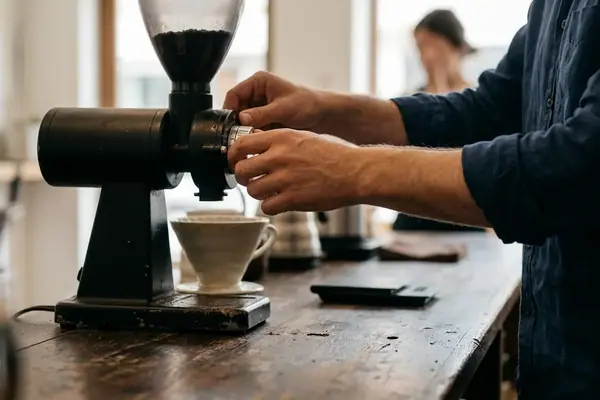
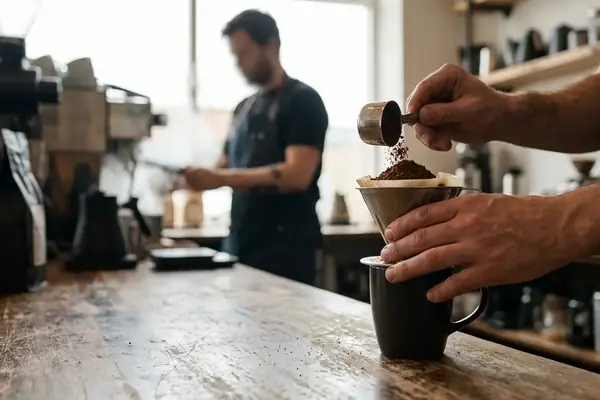
If you are starting from pre-ground coffee or a blade grinder, the burr grinder is the first meaningful upgrade. Grind consistency changes extraction more than a handsome dripper, a new mug, or a branded scoop.
With a blade grinder, some pieces turn dusty while others stay coarse. Hot water extracts those particles unevenly, which can make the same beans taste sharp, muddy, or thin. A burr grinder gives you a narrower range of particle sizes, so the water has a fairer job.
For daily brewing, look for an entry-level burr grinder that adjusts cleanly across the range you use most. Grinders that can adjust particle size in roughly the 400 to 800-micron range are especially useful for common home methods such as pour-over, drip, and AeroPress-style recipes.
Pro Tip: Adjust grind size based on bean density and taste, not a universal setting. A dense light roast may need a different grind than a softer medium roast.
2. A Small Digital Scale
A scale is not about making coffee fussy. It is about knowing what happened when the cup tastes good.
One rounded scoop can vary more than most people expect. Water lines on brewers are not always precise either. Weighing coffee and water gives you a recipe you can repeat without turning the ritual into a chore.
For home use, a compact scale that reads in 0.1-gram increments and responds in under about 200 milliseconds feels practical. The fast response matters when you are pouring water in real time; the small increments help when brewing one cup or dialing in a stronger ratio.
Start simply: weigh the beans, tare the brewer, then weigh the water as you pour. That single habit often explains why yesterday’s cup tasted better than today’s.
3. A Gooseneck or Controlled-Pour Kettle
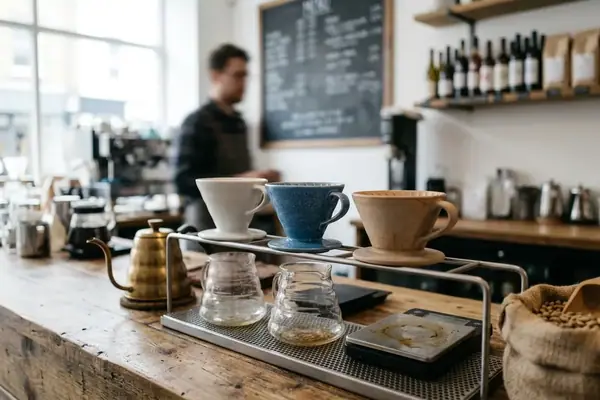
A controlled-pour kettle gives you direction. That matters for pour-over, helps with AeroPress-style brewing, and works nicely for tea.
Temperature presets are useful, but they are not mandatory for every kitchen. If the budget is tight, prioritize a spout you can control over a screen with extra modes. You want steady flow, not drama.
Beginners can use the kettle to pour slower and more evenly. As you get more comfortable, you can control agitation, target dry pockets in the coffee bed, and keep the brew from rushing past the grounds too quickly.
The Small Details That Make Drinks Feel Café-Made
4. A Simple Milk Frother or Steam-Friendly Pitcher
A small frother earns its spot if you make more than black coffee. It helps with lattes, matcha, hot chocolate, chai, and cold foam, even without a full espresso setup.
The right choice depends on what you already own. If you use a stovetop or electric milk warmer, a steam-friendly pitcher gives you better control. If you mostly want quick texture for morning drinks, a handheld frother may be enough.
Do not treat foam as decoration only. Texture changes how sweetness, warmth, and body come across. A modest drink can feel more complete when the milk or alternative milk is blended instead of merely poured in cold.
5. Better Cups, Glasses, and Spoons
Glassware will not fix weak coffee. It can, however, make a good drink feel more intentional.
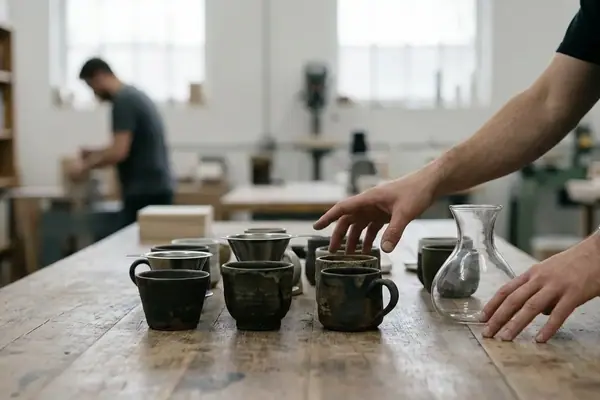
Cup weight, rim shape, heat retention, and even spoon feel affect the way a drink lands. A thin-rimmed cup can make a delicate coffee feel cleaner. A heavier mug can make a winter drink feel warmer and slower. A small glass can turn an iced latte into something that looks finished rather than assembled in a hurry.
Reader reviews show a consistent pattern here: people notice tactile details before they describe them. They may not say “rim thickness,” but they do say the drink feels better.
Buy fewer pieces, but choose them well. Two cups you reach for constantly matter more than a crowded shelf of mismatched glassware that never quite feels right.
Tools That Make the Counter Work Like a Café Station
6. A Bar Towel, Tray, or Small Prep Mat
This is the least glamorous item on the list and one of the most useful.
A towel, tray, or prep mat creates a boundary. Coffee grounds stay in one zone. A wet spoon has a landing place. The grinder, scale, and brewer stop migrating across the counter. In an apartment kitchen or shared space, that small boundary can make the difference between a pleasant routine and a scattered one.
Choose the format that matches your space. A washable bar towel suits a narrow counter. A tray works well on a morning coffee cart. A small mat helps if your brewer and grinder live on a pantry shelf and come out only when needed.
7. Airtight Coffee Storage
Freshness depends on limiting air, light, heat, and moisture. That makes the decorative clear jar near a sunny window a poor trade, even if it looks charming.
A modest opaque airtight container is usually enough. It does not need to be elaborate. It needs to close well, fit the amount of coffee you buy, and stay away from the stove, dishwasher steam, and direct light.
This is where the home café idea becomes practical. Good storage protects the work your grinder and scale are doing. If the beans are fading quickly, better measurement only helps so much.
The Overlooked Essential: Atmosphere
8. A Small Ambience Cue
People return to cafés for caffeine, but not only for caffeine. They return for rhythm, comfort, lighting, sound, and the permission to pause.
At home, one small cue can carry that feeling. A warm lamp near the counter. A quiet playlist. A comfortable stool. A linen napkin. A dedicated saucer for the cup you actually like.
Keep it modest. The goal is not to stage a café; it is to mark the habit as something more pleasant than standing over the sink while answering messages.
Warning: Atmosphere will not help much if the counter is still cluttered with unrelated appliances, mail, and dishes. Clear the work zone before adding mood.
What Not to Buy First
The fastest way to sour a home café project is to start with the item that adds the most upkeep before it improves the daily drink.
That often means waiting on expensive espresso machines, decorative syrup displays, complicated brewers, and accessories that need extra cleaning. Some espresso machines ask for roughly half an hour of daily warm-up and backflushing maintenance. That is a real commitment, not a casual upgrade.
Many disappointing purchases follow the same arc: the machine is exciting for two weeks, then cleaning fatigue wins. The issue is not laziness. The tool simply does not match the morning routine.
Upgrade based on the friction you actually feel:
- Inconsistent flavor: Start with the grinder and scale.
- Messy setup: Add a tray, towel, or prep mat.
- Boring drinks: Try a frother, better cups, or a simple garnish routine.
- Poor freshness: Fix storage before buying another brewer.
This order challenges the most photogenic version of the home café. It also saves money.
Build the Home Café Around Your Real Routine
A better home café is not the most photogenic one. It is the one that improves ordinary mornings.
Build in layers. Grind consistency and measurement come first because they change the cup directly. Drink finishers come second because texture and presentation make familiar recipes feel new. Storage and station design come third because they protect freshness and reduce cleanup fatigue. Atmosphere comes last, not because it is unimportant, but because it works best on top of a routine that already functions.
There are limits. No tool compensates for stale beans, neglected cleaning, or a recipe too complicated to repeat. The most useful setup is the one you can maintain when the morning is normal, slightly late, and not especially glamorous.
That is where the home café becomes worth keeping.