The Same Café Can Feel Completely Different by the Hour
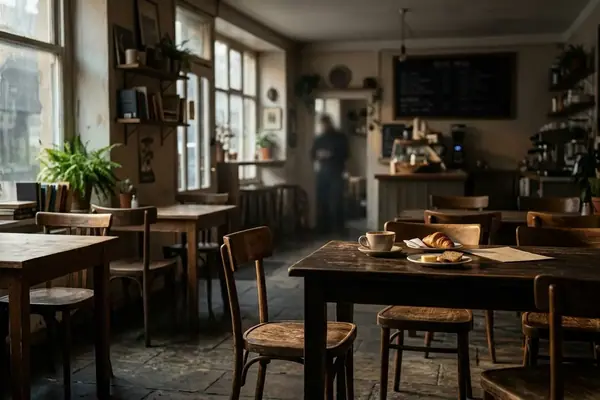
At 10:30 a.m., the room feels settled. A window table is open, the music sits below the conversation level, and nobody is waiting at the counter. You order, unpack a book, and expect an easy hour.
By 10:42, eight people stand in the queue. Cups knock against saucers, chairs scrape, and the espresso machine fires in short bursts. The peaceful café has not disappeared; you simply arrived at the edge of its next traffic cycle.
That shift can cost more than a preferred seat. It can break a productive work session, flatten a private conversation, or turn a restorative pause into a takeaway order. Anyone who spends time in café culture knows the particular frustration of choosing the right place at the wrong hour.
Quiet periods are often local and recurring rather than random. A café may soften after the commuter rush, fill before lunch, settle again, and then change when school or office traffic arrives. Weather, seasonal schedules, nearby events, and staffing can move those periods, but the underlying rhythm is usually visible if you watch for it.
Key Takeaway: Do not ask whether a café is quiet. Ask when it supports the visit you have planned.
Decide What “Quiet” Needs to Mean for This Visit
Are You Looking for Silence or Stability?
“When is this café quiet?” sounds like a simple question, but quiet can describe several different rooms. Dense reading may call for near-silence. Laptop work often benefits from a predictable hum. An unhurried conversation needs privacy without forcing both people to whisper.
Start by naming the task. Then translate that task into conditions you can see and hear:
- Whether a suitable seat is available
- How long the ordering queue remains
- How frequently tables turn over
- Whether the music competes with conversation
- How often the steam wand or blender interrupts the room
- Whether large groups arrive together
Espresso steam often comes in bursts lasting roughly 8 to 12 seconds. One burst is easy to ignore; repeated bursts during a rush can make close reading difficult. Mid-morning tables may also turn over every half hour or so, creating recurring periods of chair movement and conversation even when the café never looks full.
Why an Empty Café May Still Be Uncomfortable
A low head count is not the same as a quiet environment. Three customers sitting through a shift-change restock can experience more disruption than twenty people reading quietly. Opening tasks, deliveries, floor cleaning, or closed seating areas can make a lightly occupied room feel surprisingly unsettled.
Judge the whole setting, not merely the number of occupied chairs.
Build a Small Observation Log Instead of Trusting One Visit
One pleasant Tuesday does not establish a dependable quiet hour. Neither does one crowded afternoon rule that period out. The useful pattern appears when several brief observations line up.
What to Record
A practical log needs only enough detail to help you compare visits:
- Weekday: Note whether it is a usual workday, weekend, or local holiday.
- Arrival and departure: Record when the room changed, not only when you entered.
- Approximate occupancy: Use a consistent label rather than attempting a precise count.
- Queue activity: Note whether the line was absent, brief, sustained, or arriving in waves.
- Noise sources: Separate voices from music, equipment, deliveries, and cleaning.
- Seat choice: Record whether the seat actually suited your task.
- Visit purpose: Reading and a quick coffee place different demands on the room.
I use four plain labels: calm, steady, busy, and full. They are subjective, but consistent subjective notes are more useful than false precision.

Keep the Observation Light
Fold the log into visits you already make. A short room scan during a standard coffee pickup can capture the queue, open seating, dominant noise, and staff activity. There is no need to occupy a table for hours solely to monitor the café.
Pro Tip: Add a short note when weather, a school break, or a nearby event makes the visit unusual. Keep the observation, but do not treat it as a normal day.
Read the Room Through Staff Routines
Customers do not create all café noise. Staff routines can transform a nearly empty room into a poor place to concentrate.
Visible Cues That a Transition Is Starting
Watch for pastry trays being replenished, several mobile orders appearing together, tables being consolidated, bins being changed, or cleaning equipment coming out. These actions often signal a transition between service periods rather than an isolated sound.
Pastry case consolidation may occupy 15 to 20 minutes. During the last hour or so before closing, espresso-machine backflushing and floor sweeping commonly begin. A late visit can therefore offer plenty of seats while delivering repeated equipment noise and movement around your table.
Customer Lull or Operational Lull?
A customer lull means fewer orders and arrivals. An operational lull gives staff time to restock, clean, and prepare. The two can occur together, but they do not feel the same.
If baristas are still moving quickly after the queue disappears, pause before declaring the room calm. A stable window usually begins once order fulfillment and the immediate reset have both eased.
Warning: Do not select a quiet hour solely from an online busyness indicator. It cannot tell you whether half the tables are being cleaned or the espresso machine is undergoing maintenance.
Look Beyond the Door at the Neighborhood Clock
A café keeps the time of its neighborhood. Offices shape commuter and lunch waves. Schools create drop-off and dismissal traffic. Transit stops, markets, gyms, medical buildings, houses of worship, and entertainment venues each add their own arrivals.
Transitions Worth Checking
- Commuters arriving before nearby offices open
- Parents and staff moving through school drop-off
- Office workers leaving for lunch
- Students arriving after afternoon dismissal
- Audiences gathering before an evening performance
- Weekend shoppers moving between a market and nearby cafés
The effect inside the room depends on how people use the café. Takeaway-heavy traffic may produce a loud queue while leaving tables open. A class break or neighborhood meeting may do the reverse, filling seats quickly even when ordering remains orderly.
A café near a high school can reach full seating roughly 15 to 25 minutes after the dismissal bell. The important moment is not necessarily the bell itself; it is the lag between people leaving the building and arriving at the café.
Treat this as a local field method, not a universal traffic model. Summer schedules and academic breaks can make term-time observations obsolete, while weather can redirect people who would normally remain outdoors.
One particularly risky assumption is that Tuesday morning must be quiet. A neighboring office may hold its weekly all-hands meeting then, sending a predictable group through the door at exactly the time that looks calm elsewhere.
Test Two Candidate Windows Under Comparable Conditions
Once the log suggests two promising periods, compare them by keeping the visit itself consistent. A 9:45 a.m. takeaway order cannot fairly compete with a 2:15 p.m. reading session. The task, duration, and basic setup should match.
A Simple Comparison
Choose the same weekday type and conduct a standardized 45-minute reading session in each window. Bring the same book, order in the same way, and look for a similar kind of seat. You are isolating time as much as a real café visit allows.
During each session, check practical outcomes rather than chasing a perfectly silent room:
- Was an appropriate seat available?
- Could you order without a sustained wait?
- Were interruptions manageable?
- Did the atmosphere remain stable?
- Did staff routines displace you or change the seating area?
- Did the room support the intended activity for the full visit?
Candidate Window Comparison Checklist
- Did I secure a seat within a few minutes of receiving my order?
- Was the ambient noise consistent, or were there sudden spikes from blenders or large groups?
- Did the table size comfortably fit the items I needed?
- Could I remain for the planned 45 minutes without changing seats?
- Would I choose this window again for the same task?
The better window is the one that supports the work with less friction. A room that sounds slightly livelier but remains stable can beat an empty room interrupted by deliveries, restocking, and sudden groups.
Choose a Quiet Window That Fits the Task
Reading
Favor stable sound, low table turnover, and a seat away from the ordering path. Near-silence matters more for dense material than it does for a magazine or light novel.
Laptop Work
Sound is only one constraint. Check outlet access, Wi-Fi policy, table size, and whether laptop use is welcomed at that hour. A small round table can hold a book and mug comfortably but becomes cramped when asked to support a 15-inch laptop, notebook, and pastry plate.
Confidential Conversation
The emptiest room is not always the most private. Voices carry when there is no ambient sound. Look for moderate background chatter, adequate spacing, and seating outside the direct counter line.
Casual Conversation
A steady room can feel more comfortable than a silent one. Choose a window when ordering is easy and the music permits natural speech without placing pressure on the table to remain quiet.
A Brief Decompression Break
For a short pause, quick seating and low operational activity matter more than long-term stability. A small table near a window may be enough, even if that period would not support an extended work session.

Match the physical footprint of the task to the room as carefully as you match its acoustic needs. The best reading chair may be the wrong laptop desk, and the calmest corner may be too exposed for conversation.
A Copyable Two-Week Plan for Finding a Reading Hour
Hypothetical case: A reader wants a calm 45-minute reading visit at a café near offices and a school. The goal is a repeatable primary hour plus a backup, not a single lucky visit.
- Define success. The reader must find a suitable seat promptly, encounter no sustained queue, and experience a stable atmosphere for most of the 45-minute visit.
- Collect brief observations. Across a two-week period, the reader checks Tuesday and Thursday at 9:30 a.m., 11:00 a.m., and 2:30 p.m. These six data points come from existing coffee pickups rather than monitoring sessions.
- Use consistent labels. Each stop receives a calm, steady, busy, or full label. Notes identify queue activity, open seats, espresso noise, staff routines, and unusual neighborhood events.
- Review the pattern. In this hypothetical log, 9:30 is steady after office arrivals, 11:00 remains calm before lunch traffic, and 2:30 changes when students begin appearing after dismissal. The reader removes 2:30 from consideration.
- Test the finalists. The reader completes one 45-minute reading session at 9:30 and another at 11:00 on comparable weekdays, using the same type of seat and the same ordering routine.
- Compare outcomes. At 9:30, ordering is easy but takeaway traffic creates recurring bursts at the counter. At 11:00, the reader secures a seat within a few minutes of receiving the order, hears no sustained queue, and reads without changing tables.
- Set the schedule. Tuesday at 11:00 becomes the primary reading hour. Thursday at 9:30 becomes the backup when a Tuesday event, weather change, or office gathering disrupts the usual pattern.
The copyable plan is now specific: arrive Tuesday at 11:00, order immediately, choose the same reading-friendly table when available, and stay for 45 minutes. If Tuesday’s room is already busy, return Thursday at 9:30 and use the backup window rather than waiting for the café to settle.