Why the café sandwich looks better behind glass
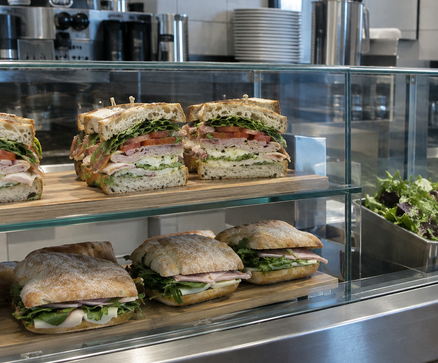
A sandwich earns its place at lunch by being easy to carry, easy to eat, and satisfying without much ceremony. Then you spot one in a café display case: turkey piled high, bright tomato at the cut face, lettuce peeking out. It looks generous. Why does that same sandwich sometimes require a fork after the first bite?
The display case rewards height. A thick center makes an immediate impression through the glass, especially when the sandwich is cut to show its filling. Your hands ask a different question. Can the bread close around everything, and will each bite bring along some of what you ordered?
This is about everyday café lunches meant to be picked up and eaten. An oversized sandwich served with utensils has its own appeal. For a portable lunch, the better measure is what happens once you lift it off the plate.
Give the filling room to reach the crust
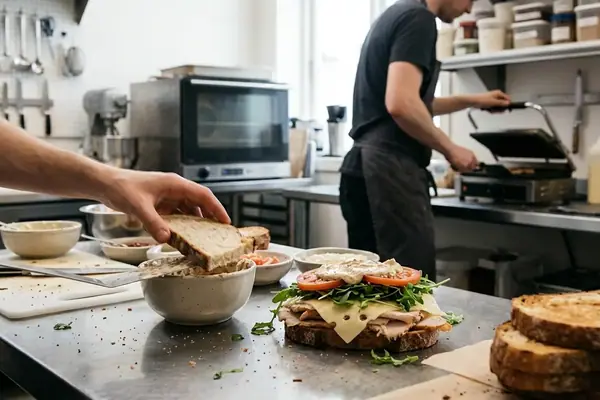
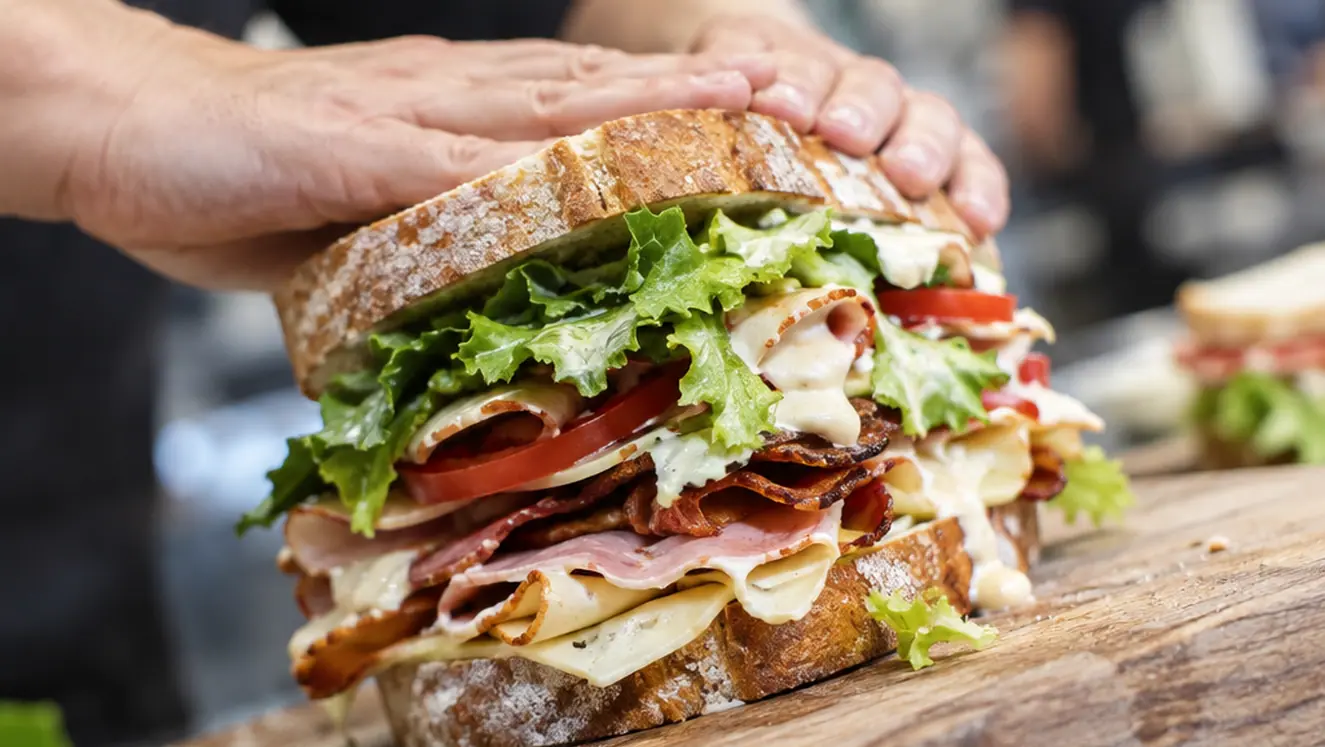
Look at the edges before you judge the height. Filling that reaches toward the crust gives you a consistent bite from start to finish. Filling heaped in the center can leave the first mouthful mostly bread and the next one crowded with turkey, cheese, and whatever has begun to slide out.
Folded slices of turkey can create a pleasingly full sandwich while spreading the weight across the bread. Pack those folds into a mound, though, and the slices bow outward when you try to close them. Tomato and lettuce have even less reason to stay put on a steep stack.
At a home café, lay out the ingredients before closing the sandwich. If you can see bare bread around a tall central pile, move some filling outward. Lower the stack until the top slice rests against the ingredients without needing a firm push.
What generosity tastes like
A generous sandwich delivers its main ingredients across the whole lunch. You should be able to taste the turkey at an edge as well as at the cut face, with enough room for the bread to do its job.
Follow the tomato when the first bite falls apart
What usually escapes first? Often it is a tomato slice, carrying the lettuce or turkey beside it. Tomato has a slick surface, and moisture on its cut face can soften the bread beneath it. A thick spread adds another slippery layer. Stack those ingredients high and the pressure of a bite sends them toward the open edge.
Assembly changes that experience. Pat tomato slices dry. Shake water from washed greens and blot any leaves that remain wet. Apply mayonnaise in a thin, even layer rather than leaving a thick patch in the center. Lettuce can sit between damp produce and a lower slice of bread; cheese or a thin spread can also help keep moisture off the crumb. Keep loose ingredients within the bread’s outline so they have somewhere to settle when you bite down.
Keep tomato off bare bread
A wet tomato pressed directly against the crumb can leave the lower slice soft before lunch. Give it a drier neighbor, especially if the sandwich will spend time wrapped in a bag. Watch for moisture collecting at the cut edge, too: it often shows where the bread will soften first.
Bread choice matters, though it cannot rescue a stack that shifts under its own weight. Soft bread feels right around tender, modest fillings. A firmer loaf gives a substantial sandwich more support. In either case, close the sandwich gently and see whether its layers stay where you put them.
Choose one crisp note for a fuller bite
Contrast can make a straightforward turkey sandwich more satisfying than another handful of filling. Tender meat and cheese welcome the freshness of lettuce, the softness of a little mayonnaise, and bread with enough texture to offer a clean bite.
Pickles can sharpen a rich filling. Crisp lettuce can lighten turkey and cheese. Those choices work because each ingredient has a purpose you can feel as you chew. A sandwich crowded with several rich spreads can taste heavy from edge to edge; too many crunchy additions can make the filling harder to bite through, pulling a whole leaf or slice out with the first mouthful.
Think about how the layers will separate under your teeth. If you have a creamy spread and tender protein, try one crisp or acidic addition before reaching for several. Taste the sandwich as a whole rather than treating every good ingredient as a reason to add another layer.
Read the cut face before you order
At the counter, take a moment to look at the sandwich from the side. Do the bread slices meet without bowing? Does the filling reach the edges? Is dressing pooling on the plate or soaking through the lower slice? A cut half that stays together is a useful sign when you plan to eat lunch away from the café.
I also look at whether the layers remain distinct at the cut face. A neat cut gives you a glimpse of how the sandwich was assembled, though appearance alone cannot tell you how it will hold up after wrapping and travel. Heating changes the question again: a pressed hot sandwich behaves differently from the cold-case takeaway lunch these checks address.
Keep the wet spread separate
If lunch will sit in your bag, ask for a wet condiment on the side. Add it when you are ready to eat, or dip each bite. That small request protects the bread during the trip without giving up the flavor you wanted.
Pack a turkey sandwich you can actually pick up
Start with two slices of firm bread and toast them lightly, just enough to dry the surface while keeping the middle pleasant to bite. Spread a thin layer of mayonnaise across each slice. Pat a few tomato slices dry with a paper towel while the bread cools.
- Lay lettuce across the bottom slice, reaching toward the edges without leaving leaves hanging far over the crust.
- Fold the turkey loosely and distribute it over the lettuce. Add one slice of cheddar, then arrange the dried tomato in an even layer.
- Set the top slice in place. If it rocks on a mound of filling, spread the ingredients outward before you close it. Bring the bread together gently without pressing the filling out.
- Cut the sandwich in half. Wrap each half snugly in sandwich paper so the cut face stays supported during transport.
At lunch, unwrap one half at a time. Notice whether the tomato stays in place and whether the bottom bread still feels firm. If the tomato slips, tuck it beneath the cheddar in the next build; if the bread softens, dry the tomato more thoroughly and keep it away from the lower slice.