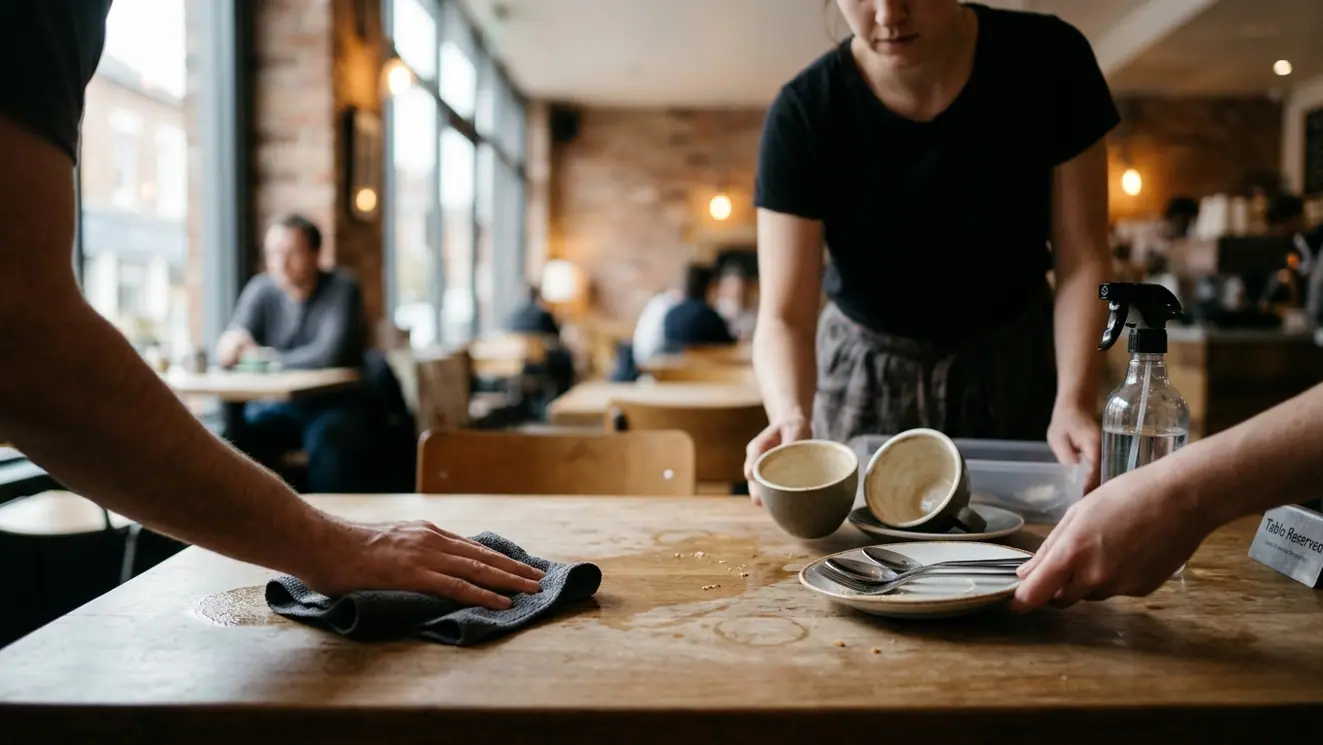
The Arrival of the Second Cup
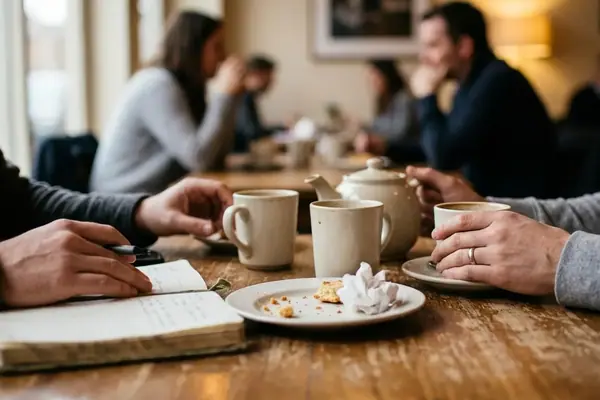
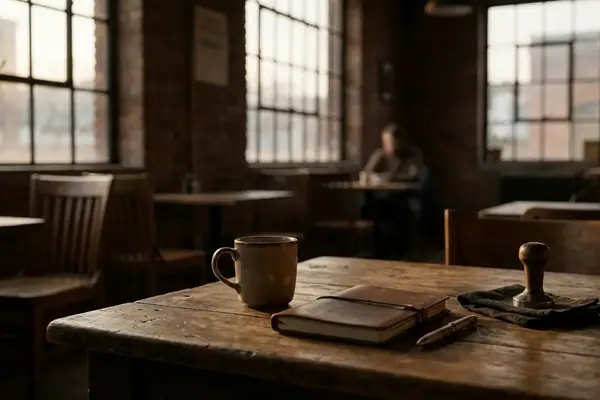
A companion approaches the table holding a freshly poured cappuccino and a warm pastry plate. The standard café two-top measures 60 by 60 centimeters, give or take. Right now, that surface holds an open laptop, a scattered weekend newspaper, a phone, and a half-empty ceramic mug. The arriving beverage is more or less 60 to 65 degrees Celsius. The person holding it freezes, scanning the cluttered wood grain for a safe landing spot.
This brief hesitation signals the need for an immediate physical reset.
Café tables present the same spatial challenge in these everyday moments. The tension centers entirely on the hot drink, the unstable plate, and the proximity of nearby guests. Clearing the space protects the conversation, the expensive equipment, and the staff member trying to serve the next course. The table reset marks the shift from a solitary workspace to a shared dining experience. It requires a deliberate move from passive sitting to active space management.
Mapping the Two-Top Zones
Where should everything actually go? Before touching a single napkin, map the table into three distinct zones. Establish two personal areas for individual items and designate one shared landing space in the center for food. Leave a minimum 15-centimeter clear edge along the side facing the main aisle. Staff require this clearance to safely place or retrieve dishes without reaching awkwardly over personal belongings.
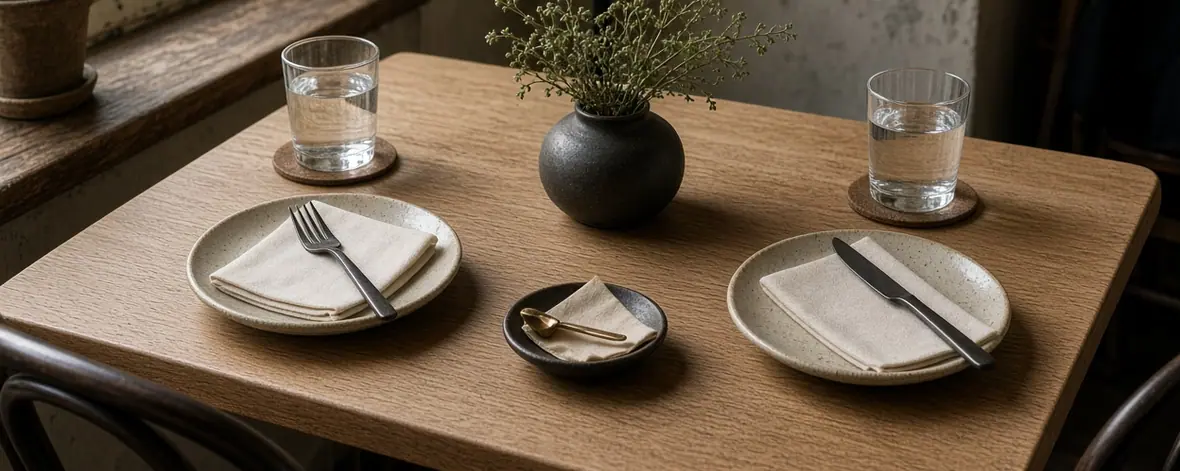
Keep hot cups far from laptop edges and charging cables. Loose sleeves easily catch on trailing wires, pulling delicate electronics directly toward liquids. This spatial division assumes a standard square or round two-top; fixed booth seating or narrow bar ledges dictate entirely different clearing sequences. Sorting objects mentally into essentials, movable items, and things that should leave the tabletop entirely streamlines the physical process. A clear mental map prevents the frantic shuffling of items from one corner to another.
Executing the Sixty-Second Clear-Out
A deliberate clearing sequence works much better than a rushed sweep of the arms. Pause before another cup or plate touches the table and tell your companion that space is being cleared. Give yourself something like a 60-second window to reset the table.
Spend the first 10 seconds removing finished glasses, wrappers, and crumpled receipts. Ask staff where appropriate rather than placing dirty dishes on nearby empty tables. Dedicate the next 20 seconds to consolidating small essentials. Group your phone, keys, and notebook into one personal zone. Use the final 30 seconds to secure electronics and finish clearing.
The 60-Second Table Reset Sequence
- Pause and announce the clear-out before the new item arrives.
- Remove finished glasses and disposable clutter.
- Consolidate small essentials (phone, keys) into one personal zone.
- Check cables and cup positions before closing laptops.
This sequence prevents the common reaction of simply pushing all clutter to the table's center. It creates a clear, predictable setup for both patrons and staff.
Transitioning Between Work and Food Modes
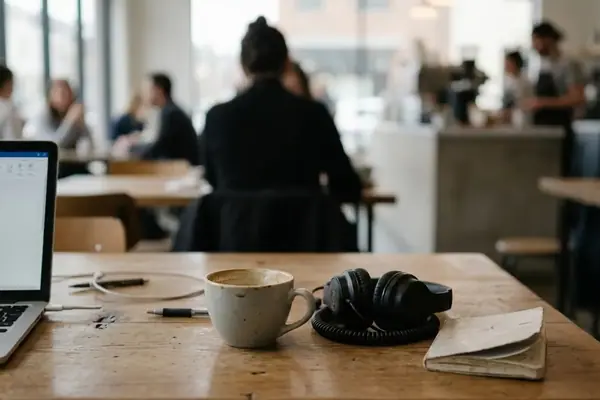
A table operates in distinct phases throughout a visit. Work mode accommodates one or two open laptops, notebooks, and reference materials. Food mode requires those screens to close or move aside completely. The physical impossibility of a 13-inch laptop and 10-inch plate sharing a 24-inch table depth forces a clear, immediate decision.
The transition happens when the laptops close and the risk of liquid damage outweighs the convenience of keeping a screen visible during a meal.
Place cups where each person can lift them without reaching across a keyboard or the other person's food. Avoid the tempting but unstable arrangement of cups balanced on notebooks, saucers resting over cables, or phones tucked precariously beneath plate rims. Every item needs a flat, secure foundation. Keeping cups and laptops in their own dedicated modes leaves both secure and out of the way.
Managing Bags and Coats Before the Food Arrives
Bag and coat management must happen before the food arrives. Any necessary bending or reaching should occur well away from freshly served, hot dishes. Keep personal bags within a 30-centimeter radius of your chair legs. Use provided hooks, under-seat space, or a bag position directly between your feet when practical.
Heavy bags hung on the back of a chair can tip the seat, occupy a narrow walkway, or create a dangerous obstacle for staff and guests. Securing these items early ensures the reset does not become hurried around hot dishes. The physical space around the table remains clear for service and movement, while the shared café space stays usable.
Shifting Chairs Without Bumping Neighbors
Adjustments to seating and table positioning require minimal, communicated shifts. Use short, specific requests, asking whether a notebook can move or which side a companion prefers for their coffee. Limit chair adjustments to a 5 to 10 centimeter shift to avoid bumping guests seated directly behind you.
Keep dishes on the table until staff collect them unless the café uses a clearly designated return point. Sudden movements disrupt the spatial comfort of neighboring patrons. A calm, coordinated reset preserves the rhythm of the room and allows the café to function smoothly around you.
Anticipating the Service Rhythm
The final spatial decision relies on anticipating the service rhythm. There may be only somewhere around 3 to 5 seconds between a server approaching and the plate needing a landing spot. The best reset happens at a transition: when a companion arrives, food is called, or work gives way to conversation.
Before the next cup or plate arrives, stop, choose its landing spot, and clear that space completely.