
What Makes a London Fog Taste Like a London Fog
A London Fog is an Earl Grey tea latte flavored with vanilla and finished with steamed or foamed milk. Its short ingredient list looks forgiving. In the mug, each weakness becomes obvious.
Tea brewed at ordinary drinking strength often disappears once milk arrives. Too much vanilla crowds the bergamot and leaves the drink smelling closer to confectionery syrup than citrus-scented black tea. Thin milk gives the cup a diluted finish, while coarse froth sits on top without becoming part of the drink.
The intended balance has four clear parts: recognizable black tea, fragrant yet controlled bergamot, restrained sweetness, and milk that softens the tea’s astringency without erasing its shape. In side-by-side tasting, I treat the point where dairy begins to mask the bergamot as the practical limit. The aroma should still rise from the cup after the first pour of milk.
A well-made London Fog therefore tastes like tea from the opening sip through the finish. Vanilla rounds its edges. Fine foam gives it the gentle texture associated with café culture, even when the drink comes from a home café setup.
A Reliable London Fog Ratio for One Large Mug
For an approximately 300-milliliter drink, begin with a compact tea base and enough milk to create a latte texture. This formula gives both ingredients room to register.
Ingredients
- 2 Earl Grey tea bags or 4 to 5 grams loose-leaf tea
- 180 milliliters water
- 120 milliliters milk
- 1 to 2 teaspoons vanilla syrup
These measurements are a starting formula rather than a universal rule. Earl Grey blends differ sharply in leaf grade, black-tea strength, and bergamot intensity. A brisk blend may hold its character with two bags, while a softer blend may need the upper end of the loose-leaf range.
Useful Equipment
- Kettle
- Large mug or small teapot
- Timer
- Fine strainer for loose tea
- Thermometer, if available
- Handheld frother, steam wand, French press, or another milk-frothing tool
The ratio matters more than specialized equipment. A timer and measured water will improve this drink more reliably than an elaborate frother paired with a weak infusion.
Steep the Earl Grey Strong Enough to Meet the Milk
Heat the water to approximately 93 to 96°C for a conventional black-tea Earl Grey. Without a thermometer, bring fresh water to a boil and let it settle briefly before pouring.
Use 180 milliliters rather than filling the entire mug. This produces a concentrated base that can accept 120 milliliters of milk without tasting washed out.
- Place the tea in a mug or small teapot.
- Pour in the measured hot water.
- Start a timer and taste at 3 minutes.
- Continue toward 4 minutes if the tea remains soft.
- Remove the leaves or bags by 5 minutes if dryness or bitterness begins to appear.
An extended steep can appear to be the easiest route to greater strength. Testing an eight-minute infusion produced more tannin, yet the added astringency made the finished base unpleasant. Increasing the quantity of tea while keeping extraction within the 3-to-5-minute window gives a fuller result with fewer rough edges.
Check the Tea Base
The 93 to 96°C range applies specifically to black-tea Earl Grey. Green- or white-tea versions require cooler water; this temperature can scorch their leaves and produce bitterness.
Control the Vanilla, Then Build Fine Milk Foam
Stir 1 teaspoon of vanilla syrup into the hot tea concentrate and taste it before adding more. This pause matters because bergamot and vanilla both contribute strong aromas. When either becomes excessive, the drink reads as perfumed rather than rich.
Next, heat the milk to roughly 55 to 65°C. Stop before it simmers. Within this range, milk retains a naturally sweet impression and accepts air readily. Once the temperature moves beyond 65°C, foam structure becomes harder to preserve and the milk can lose its smooth character.
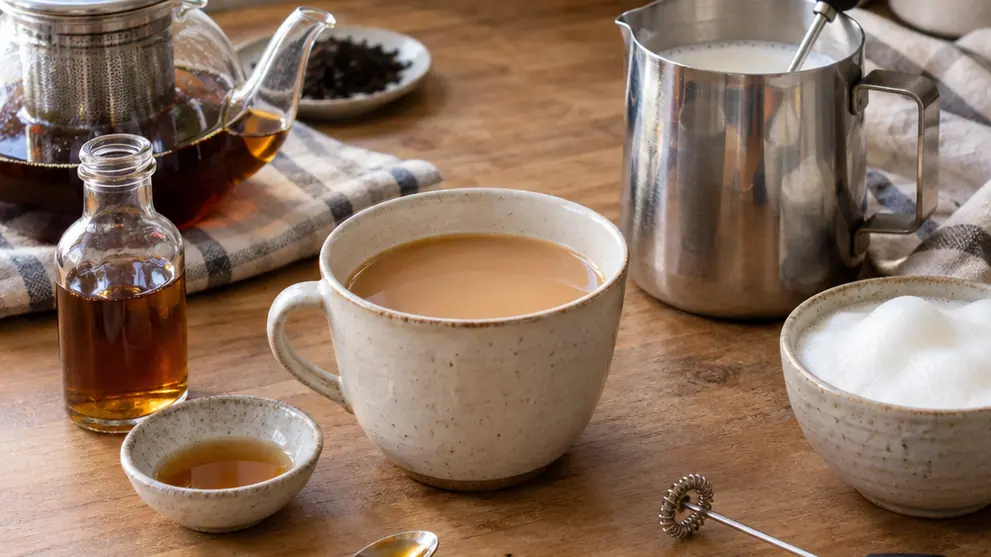
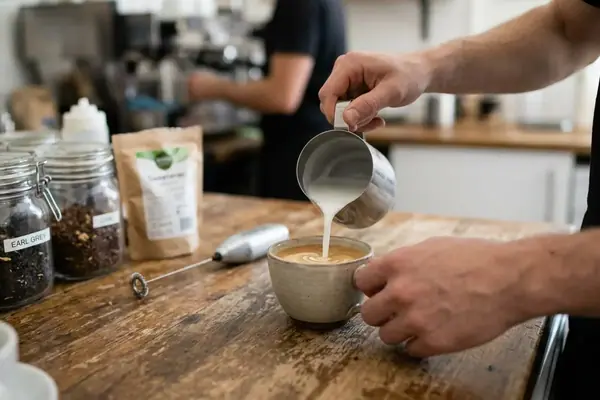
Aim for glossy microfoam with small, even bubbles. The surface should resemble wet paint and move as one fluid layer when the vessel is tilted. A tall, rigid cap of dry bubbles looks dramatic, though it separates from the tea instead of lending body to each sip.
Frothing Without a Steam Wand
A handheld frother works quickly: keep its head near the surface for a short burst, then lower it to circulate the milk and refine larger bubbles. With a French press, move the plunger through the warm milk in controlled strokes, then swirl the vessel and tap it gently on the counter. In either case, stop once the milk appears glossy. Continued agitation can turn fine foam coarse.
Pour the London Fog Without Losing Its Layers
Assembly determines whether the vanilla dissolves cleanly and whether the foam survives. Follow the same order each time.
- Prewarm the mug. Fill it with hot water, wait briefly, then empty it. A warm mug slows the drink’s initial heat loss.
- Brew the tea concentrate. Remove the tea bags or strain out the leaves when the flavor is firm and balanced.
- Dissolve the vanilla. Stir it into the hot tea before milk enters the cup.
- Pour the liquid milk first. Hold back the thicker foam so the tea and warm milk combine evenly.
- Finish with foam. Spoon or pour the remaining microfoam across the surface.
This sequence protects the most delicate component. Stirring syrup after adding the foam punctures its structure and can leave pockets of sweetness near the bottom. Dissolving the vanilla early produces an even cup from the first sip to the last.
Fix a Weak, Bitter, or Overly Perfumed London Fog
Most London Fog problems become easier to correct once tea concentration, extraction, vanilla aroma, and milk texture are treated as separate variables. Changing several at once hides the cause.
| Symptom | Likely Cause | Next Adjustment |
|---|---|---|
| Weak after adding milk | Insufficient tea concentration | Increase tea quantity or reduce steeping water volume |
| Bitter or drying | Over-extraction or squeezed tea bags | Shorten the steep and remove the bags without squeezing |
| Vanilla dominates | Too much syrup for the Earl Grey blend | Add unsweetened brewed tea now; use half as much syrup next time |
When Milk Exposes a Weak Base
If the tea tastes acceptable before milk but faint afterward, avoid solving the problem with a much longer steep. Use more tea or slightly less steeping water in the next batch. Both approaches build concentration while limiting the tannins associated with prolonged extraction.
When the Finish Feels Dry
Shorten the infusion and check the water routine. Water that has been repeatedly boiled can make careful tea & beverages preparation less predictable. Tea bags should also drain naturally; squeezing them presses more astringent liquid into the mug.
When Aroma Becomes Perfume
Vanilla syrup adds sweetness and aroma at the same time. To rescue the current mug, brew a small amount of unsweetened Earl Grey and blend it in gradually. For the next cup, begin with half the previous syrup quantity and taste before adding more.
Foam that vanishes quickly usually points to overheated milk or bubbles that were too large from the start. Keep the milk within the stated temperature range and spend more time circulating it after the initial introduction of air.
Make Tea Strength Your First Adjustment
The repeatable sequence is compact—brew a concentrated Earl Grey, sweeten cautiously, create fine foam, and combine the components only after each tastes right on its own.
For systematic improvement, change one variable per attempt. Adjust tea quantity first, then water volume, steep time, vanilla, or milk temperature. Record the change if you make London Fogs often. Even a brief note such as “two bags, four minutes, one teaspoon vanilla” makes the next cup easier to refine.
The temptation to add syrup is strongest when a drink feels flat, because sweetness creates an immediate sense of intensity. It cannot restore the black-tea backbone or bergamot aroma lost beneath the milk. When a London Fog lacks character, strengthen the Earl Grey before adding more vanilla.