Two Green Cups, Two Completely Different Drinks
Two iced matchas can leave the counter carrying the same menu name and little else in common. One arrives vivid green, creamy, and gently sweet. The other looks muted, drinks thin, and finishes with a sharp bitterness that lingers after the ice has shifted.
Clear glassware makes the contrast especially noticeable. Beverage teams often choose it because the suspended green powder catches the eye, turning a standard 12-ounce iced pour into part of the café presentation. Color can set an expectation of freshness and intensity before the first sip, though it cannot explain the flavor by itself.
A matcha latte reflects a chain of decisions that the menu rarely lists: the powder, its storage, the water temperature and volume, the milk, the sweetener, the mixing tool, and the pace of service. Ice introduces another variable. Each choice changes what reaches the palate.
A Six-Part Reading
When I compare matcha drinks, I read them in this order: powder, water, milk, sweetness, technique, and service conditions. The sequence starts with the tea itself, then moves through the ways a café can reveal, soften, dilute, or cover its character.

The Powder Sets the Flavor Baseline
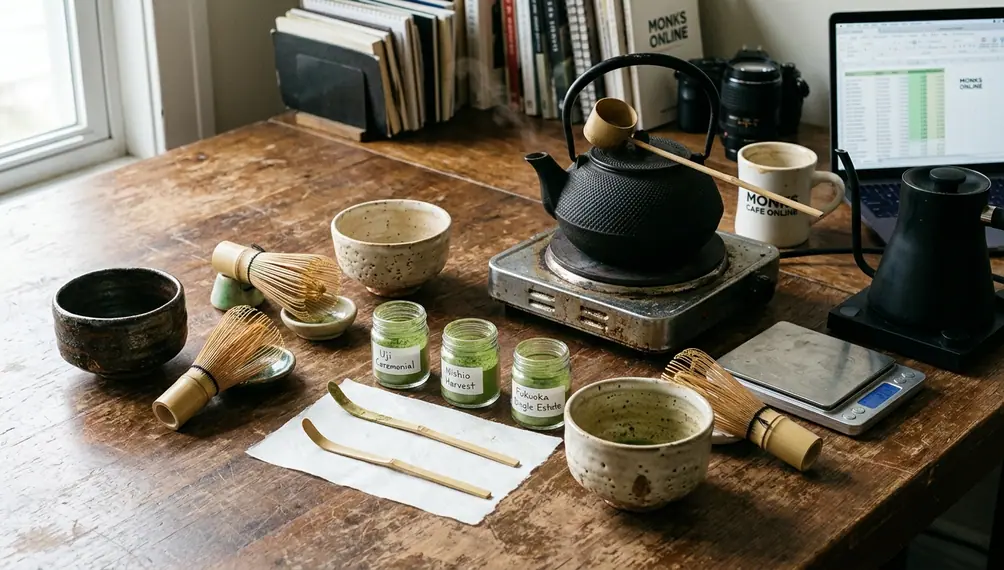
Dry matcha already contains the drink's central flavor direction. Depending on the leaf material and processing, it may taste vegetal, marine, nutty, floral, sweet, savory, or markedly astringent. Milk and syrup can reshape those qualities, but they begin with the powder.
Harvest timing matters in menu development. A sourcing team may taste several harvest flushes while balancing wholesale cost against the profile needed for a plain matcha and a milk drink. A delicate first-harvest matcha, for example, can disappear beneath a high-fat oat milk. A more forceful powder may hold its place in the same recipe, even if it seems less refined when whisked only with water.
Freshness After Opening
Particle fineness affects both texture and dispersion. Fine powder incorporates more evenly when handled carefully; coarser or poorly dispersed material can leave a sandy finish. Exposure to heat, light, air, and moisture also dulls aroma and color.
One controlled storage approach uses opaque, airtight tins held at around 4°C to 8°C, with opened matcha used within about 30 to 45 days. That range describes a specific handling method rather than a universal freshness deadline. Frequent opening, condensation, container size, and time spent on a warm counter all change the practical result.
Retail labels offer limited help. Terms such as ceremonial grade appear inconsistently across café and retail settings, so the phrase alone cannot guarantee a particular harvest, sweetness, color, or flavor standard. The cup provides better evidence than the front of the tin.
Water Changes What the Powder Reveals
Why do baristas begin with water instead of stirring dry matcha straight into milk? Water allows the particles to separate and form a concentrated base. Dry powder added directly to cold milk tends to float, gather at the surface, or hide inside small clumps.
Temperature and Concentration
During morning preparation, a barista may test the hot-water tower before service. A working recipe might pair about 2.5 grams of matcha with a 30-gram to 40-gram water yield at roughly 76°C to 80°C. Those figures create a repeatable starting point for that powder and bar setup.
Hotter water can draw out stronger extraction and more astringency. Cooler water often produces a softer impression, although an inadequate dose or weak mixing can leave it flat and underdeveloped. Water volume matters just as much: a large volume makes a looser base, while a smaller volume concentrates both appealing and harsh notes.
Temperature Has Company
Judge heat together with powder, dose, water volume, and contact time. A temperature that suits one matcha may give another a hollow or aggressively bitter finish.
This is why a precise degree should be treated as part of a recipe rather than a stand-alone rule. The café must dial in the whole combination.
Milk Does More Than Make Matcha Creamy
Milk changes aroma, texture, sweetness, bitterness, and the amount of matcha perceived in each sip. It also occupies most of the cup in many café recipes, giving its own flavor considerable influence.
Dairy commonly adds richness and rounds the edges of astringency. Oat milk can contribute cereal-like sweetness, almond milk may bring roasted or nutty notes, and coconut milk can take command of the aroma. Macadamia and coconut milks can mask the tea's natural marine character so thoroughly that assessing the café's baseline powder becomes difficult.
The Brand Matters
Milk categories are only a starting point. Formulations vary in added sugar, fat, stabilizers, and flavor. A barista version designed for steaming may behave differently from the same producer's everyday carton, and two oat milks can create distinctly different drinks.
For hot service, some bar teams target milk temperatures of around 55°C to 60°C to preserve sweetness and texture while limiting unwanted protein changes. Steaming technique also determines whether the milk feels glossy and integrated or airy and detached from the matcha base.
The useful comparison is therefore specific: the same powder, prepared the same way, with two identified milks. Comparing broad categories without controlling the recipe reveals less than it appears to.
Sweetness Can Balance, Mask, or Redefine the Drink
A matcha can taste naturally sweet before anyone reaches for syrup. The impression may come from the tea, the milk, or both. Added sweetness introduces a separate layer through sugar, simple syrup, honey, flavored syrup, or a pre-sweetened matcha blend.
A moderate amount can soften perceived bitterness and make savory or earthy notes easier to read. In one standardized café recipe, the bar team might use about 10 to 15 grams of liquid sweetener in an 8-ounce beverage. That quantity is meaningful only alongside the syrup concentration, powder dose, and milk choice.
Plain and Flavored Drinks Need Different Tests
Heavy sweetness can obscure the vegetal and marine qualities that distinguish one powder from another. It can also make a weak matcha seem fuller at first, with the lack of tea character becoming apparent near the finish.
Vanilla, fruit, and seasonal syrups set a different tasting target. A strawberry matcha succeeds through the interaction of fruit, sweetness, milk, and tea; it should not be judged as though it were a plain matcha latte with an accidental addition. The menu name should tell the drinker which experience the café intends.
Ask whether the matcha blend is pre-sweetened before requesting extra syrup. A prepared blend may already contain sugar, leaving the barista less room to adjust the drink than a recipe built from unsweetened powder.
The Hidden Workflow Behind the Counter
The smoothest matcha often begins with an unglamorous step: sifting. Passing the powder through a fine screen breaks up compacted particles before water is added. Skipping that step can produce dry pockets, gritty clumps, and uneven flavor from one sip to the next.
During a morning rush, saving a few seconds by bypassing the sifter may appear harmless. The resulting iced matcha can taste significantly more bitter because concentrated clumps reach the tongue amid otherwise diluted milk. The powder has not changed; its distribution has.
Three Tools, Three Outcomes
- Bamboo whisk: A vigorous M-shaped motion for roughly 15 to 20 seconds can disperse a small water-based matcha concentrate and create a fine surface foam.
- Handheld frother: The motor adds speed and works well in compact stations, though careless use can create large bubbles or leave material at the vessel's edge.
- Blender: Useful for cold drinks and higher-volume preparation, it distributes powder forcefully and may introduce more aeration than the recipe needs.
None of these tools guarantees a better drink. Vessel shape, batch size, operator control, and cleaning routines affect the outcome. Some cafés aim for a micro-foam layer of roughly 2 to 3 millimeters; others prefer a nearly foamless concentrate that combines quietly with milk.
Order of Assembly
- Measure the powder and sift it into a dry vessel.
- Add the recipe's measured water.
- Whisk, froth, or blend until no dry pockets remain.
- Add sweetener at the stage required for even dissolution.
- Combine the base with milk, then add ice for cold service.
Preparation to order usually preserves a more even suspension. If a base sits before service, particles can settle and require thorough remixing.
How to Read the Cup and Order More Precisely
One sensory clue rarely identifies a single cause. Harshness may come from the powder, excessive heat, a concentrated dose, or too little sweetness for that recipe. Thinness may point to a weak dose, excess milk, or melting ice. Grittiness gives a narrower signal and usually directs attention toward dispersion, clumping, or settling.
A Practical Diagnostic Sequence
- If it tastes harsh: Keep the milk fixed and ask for adjusted sweetness, or compare the same drink at a smaller size.
- If it tastes thin: Order an 8-ounce drink instead of a 12-ounce or 16-ounce cup to reduce milk dilution.
- If it tastes gritty: Notice whether grit appears immediately or collects near the bottom. Early grit suggests poor dispersion; late grit may reflect settling.
- If the tea disappears: Try the same recipe with a milder-tasting milk before judging the powder.
- If every sip differs: Mixing and assembly deserve attention before changing the sweetener or matcha dose.
Change One Variable
Keep the café, drink size, and flavoring constant while changing only the milk, sweetness, or serving style. Several changes in one order make the result difficult to interpret.
Four concise questions will clarify most café matcha recipes: Is the matcha blend pre-sweetened? Which milk is used? Can the sweetness be adjusted? Is the drink prepared to order? Staff can usually answer these without turning a casual order into an interrogation.
On your next café visit, order an 8-ounce plain matcha with the house milk, ask whether the powder is pre-sweetened, and record three observations after the first sip: bitterness, texture, and how clearly the tea comes through.