The Pastry Texture Worth Saving
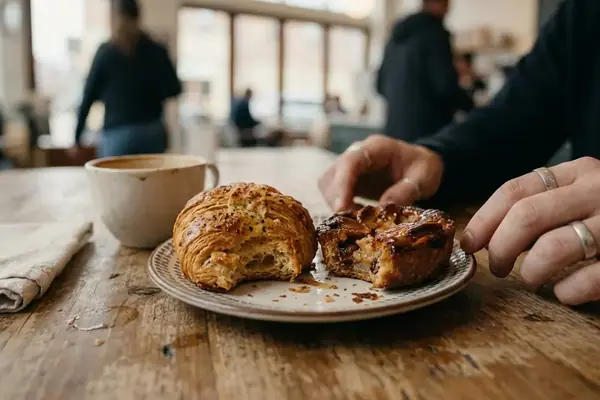
A café croissant can survive the freezer and still lose the reason you bought it. Its shell turns leathery, its middle feels chewy, and the flakes that scattered across your plate yesterday stay stubbornly attached today.
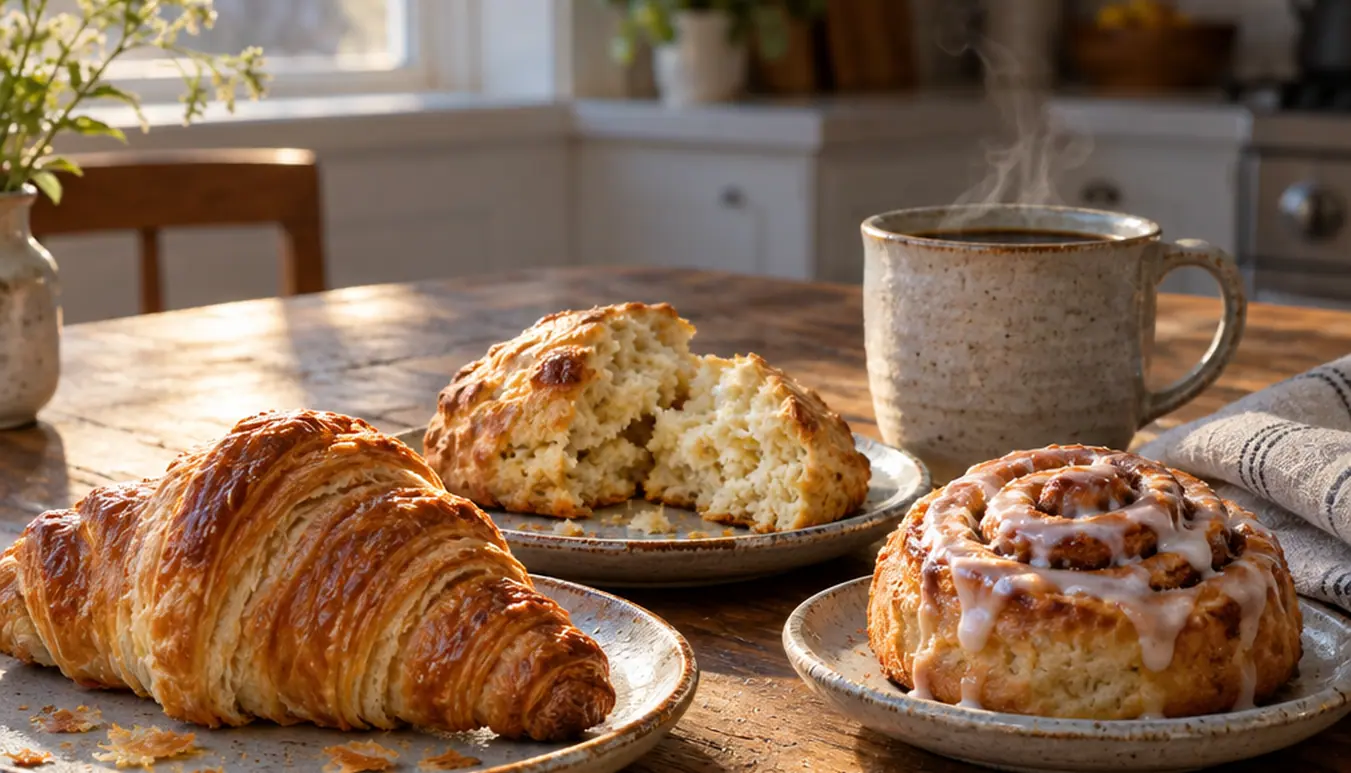
A scone presents a different problem: the outside dries while the center is still cold. A cinnamon roll can emerge with a hot, sticky glaze over a barely warmed spiral. Treating all three to the same wrapping and reheating routine puts their defining textures at risk.
The useful distinction starts with their structure. Croissants have delicate laminated layers; scones have a low-moisture, crumbly dough; cinnamon rolls have soft, enriched yeast spirals. A dependable home café breakfast begins by deciding which texture you want to protect, then packaging and warming accordingly. These instructions concern already-baked pastries; raw frozen dough needs a separate baking process.
Cool Pastries Fully, Then Protect Their Shape
I tried vacuum-sealing cooled pastries to keep freezer air away, but the suction flattened the croissant honeycomb into dense layers. It was an appealing packaging idea with the wrong mechanical effect.
That same pressure can come from an overfilled freezer drawer. Close wrapping helps control air exposure; a rigid outer container protects a fragile pastry from whatever lands on top of it.
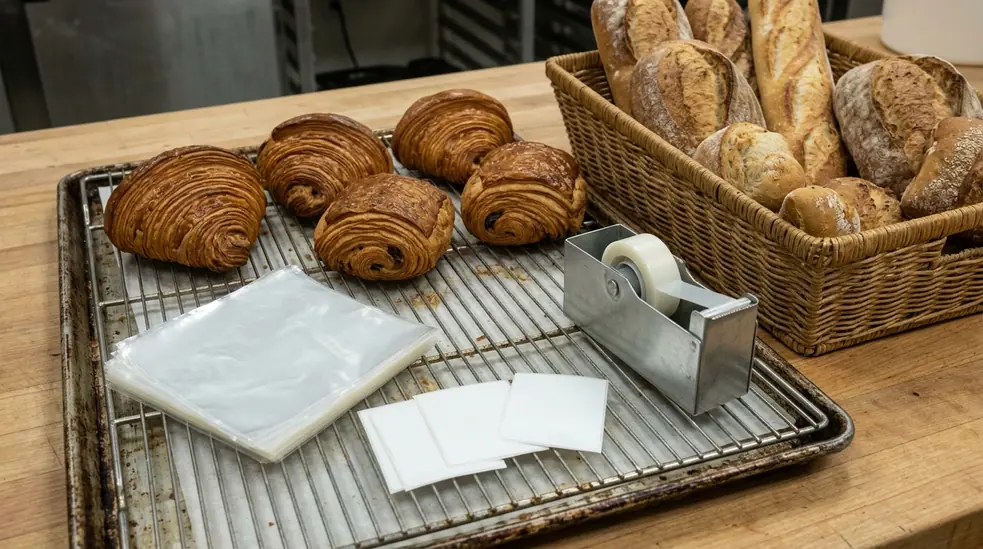
- Cool completely. Set plain, unfilled pastries on a wire rack until the center reaches room temperature. Even a lukewarm bake can release moisture inside its wrapper.
- Separate breakfast portions. Package what you expect to warm together so you can retrieve it without exposing the rest.
- Wrap closely without compressing. Follow the pastry’s outline, leaving the croissant’s raised layers intact.
- Add an outer freezer barrier. Use a freezer bag or a suitable rigid freezer container.
- Label the contents and freezing date. Exact dates make later texture comparisons useful.
Moisture trapped during packaging and moisture lost during storage need different solutions. Cooling prevents condensation from becoming surface ice. Wrapping limits the drying that occurs as the pastry sits frozen.
A freezer bag alone takes little effort, though opening it exposes every loose pastry inside and its flexible walls offer little crush protection. Individual wrapping inside a bag makes portions easier to retrieve. Individually wrapped portions in a rigid container add physical protection but occupy more space and require more handling. Choose around the pastry’s fragility and your freezer’s layout.
Sort Cinnamon Rolls by Glaze and Filling
Should you freeze a cinnamon roll with its icing on? For home baking, freezing it unglazed gives you more control. Warm the roll first, let the fierce surface heat subside, then add the icing. That sequence helps the topping remain visible and set rather than soaking transparently into the spiral.
An already-glazed café roll needs headroom. Put it in a rigid container and arrange any protective parchment or foil above the topping, supported by the rim. Pressure against the glaze can leave breakfast attached to its wrapper when it softens.
During reheating, use gentle heat and watch the topping as well as the dough. A melting glaze can reach the baking sheet and scorch before the center warms.
Pastries with perishable fillings need separate handling: follow the bakery’s product-specific refrigeration, freezing, and reheating directions rather than applying this plain-pastry cooling and warming routine.
Give Each Pastry Its Own Reheating Finish
Start with the equipment you have and use texture checkpoints to adjust it. Already-baked pastries need warming through; continuing until they look freshly baked again can dry them out.
Croissants Need Dry Heat and an Open Rest
Remove all storage packaging. Preheat a moderate oven and a bare sheet pan, then place the croissant on the heated pan. Dry heat lets the outer flakes regain crispness without trapping steam around the layers.
If the surface browns before the middle warms, shield the top loosely with foil while leaving room for steam to escape. Check the center as well as the shell. Stop when the middle is warm and the outer flakes break lightly under gentle pressure, then give it a brief uncovered rest.
Scones Need Protection at the Cut Face
Use gentle oven heat and check the center before the edges turn dry. Keeping a scone whole leaves less crumb exposed during storage and warming.
If you prefer to freeze it split, loosely protect the cut faces with foil during reheating. Splitting exposes the interior directly to moving hot air, so those surfaces can harden while the dense center remains chilly. Stop once the center has lost its coldness and the crumb still yields rather than crumbles into dryness.
Cinnamon Rolls Need a Soft Spiral
Place the roll in an oven-safe dish and cover loosely for gentle warming. Here, retaining some moisture helps preserve the soft spiral. Keep the cover clear of any glaze.
Check the center rather than judging by melted icing alone. Stop when the middle feels warm and the dough remains soft. For an unglazed roll, let the surface settle before finishing with icing.
Compare Pastries From the Same Bakery Batch
A useful kitchen comparison starts before anything goes into the freezer. Buy comparable pastries from the same batch or purchase, and taste an unfrozen portion as your fresh-texture reference. Note the shell, center, and softness while those details are easy to remember.
Then change one variable at a time:
- Compare packaging with the same storage interval and reheating method.
- Compare storage intervals with the same packaging and warming routine.
- Compare reheating settings using portions stored under similar conditions.
Keep a compact log: pastry type; inner and outer wrapping; exact days frozen; thawing method; oven setting; warming duration; and texture after resting. Describe the crust and center separately. “Crisp shell, tough middle” gives you more to work with than “fine.”
For a more careful comparison, let each sample rest uncovered on a rack for the same interval before tasting. Residual heat can disguise a dry scone crumb or a tough croissant interior. This is a repeatable household test routine, not a claim that one wrapper or appliance always wins.
Price the Breakfast You Actually Eat
A bakery discount only saves breakfast money when the pastries get eaten. Calculate the cost per eaten portion by adding the pastry cost, packaging cost, and any measured reheating energy cost, then dividing by the portions actually consumed.
Keep purchased pastries and home baking separate. For café purchases, begin with the receipt. For home-baked batches, begin with ingredient spending. Counting both a purchase price and ingredients would charge the same breakfast twice.
Leave discarded portions in the spending total—freezer-dried scones still cost money. Also consider how you warm breakfast: preheating a full-sized oven for a lone pastry concentrates that energy overhead on one serving. Warming portions together or using a compact countertop oven changes the calculation. Include an energy cost when you have measured it.
Freeze for the Breakfast You Will Want Tomorrow
Before the bakery box disappears into the freezer, give each portion a purpose:
- Croissant: protect the layers from pressure and plan for dry reheating.
- Scone: guard its moisture, especially across a cut face.
- Cinnamon roll: preserve the soft center and plan the glaze separately.
Package for storage, reheat for the pastry’s defining texture, and use your comparison notes to refine the next batch. Freeze portions that fit an actual breakfast habit so each package has a likely morning waiting for it.
A croissant’s crisp bite depends on paper-thin dough layers held apart by steam pockets; the weight of another freezer container can flatten the structure you later ask the oven to revive.